| Version 2 (modified by , 14 years ago) ( diff ) |
|---|
July 25, 2012
I looked into Fourier transforms of bias data, based on reports (see http://asd.gsfc.nasa.gov/Bernard.Rauscher/Research/Publications_files/article.pdf) that the read noise can be improved via a Fourier process. The method described assumes that the correlated noise arises due to a time dependent component that is difficult to detect. Therefore, in order to examine this, I asked Sidik for the read out times that could be used to flag each pixel with a given time. Sidik responded that the pixels are read out as
T(x,y) = x * dt + y * (dt2 + e2 + delta2)
where x and y are the pixel coordinates on a cell, dt is the readout time for a pixel (dt = 2030ns), dt2 is the time to shift rows down (dt2 = 89880ns), e2 is a constant unknown error in dt2 (e2 <= 100ns), and delta2 is a jitter component (delta2 = +/- 10-20ns). As e2 and delta2 are small relative to dt2, they were ignored entirely.
To prepare the pixel data to allow for an FFT, the image mean was subtracted (to zero the DC component), and the pixels were indexed based on dt, such that
i(x,y) = x + int(y * 89880 / 2030) / y
with all unpopulated values of i zero-padded.
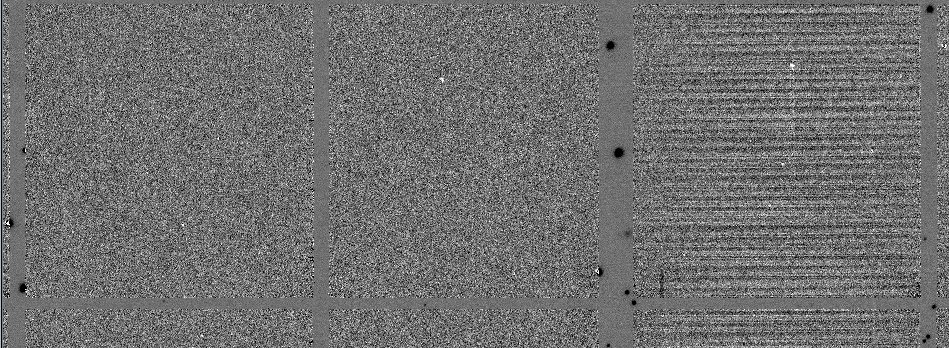
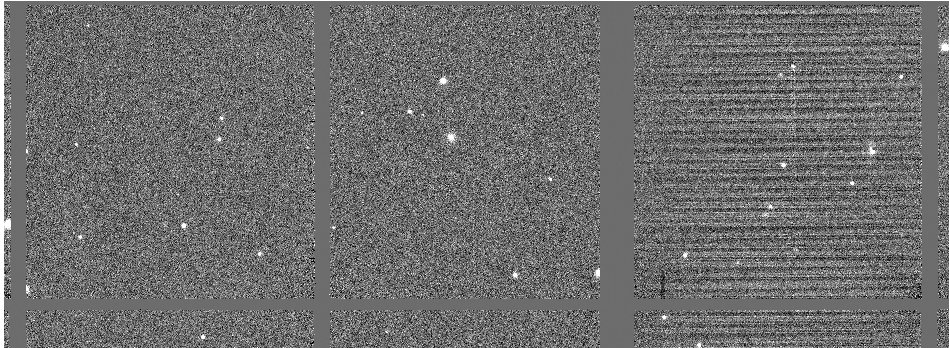
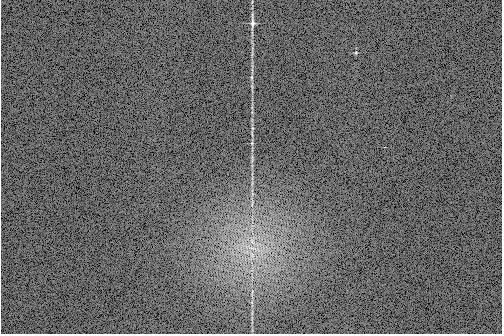
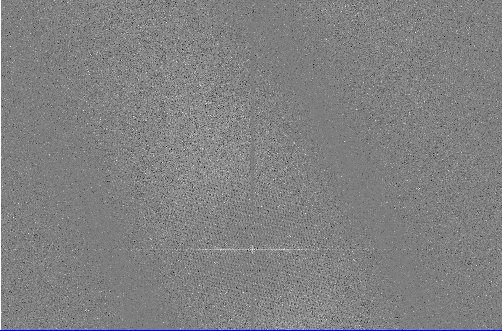
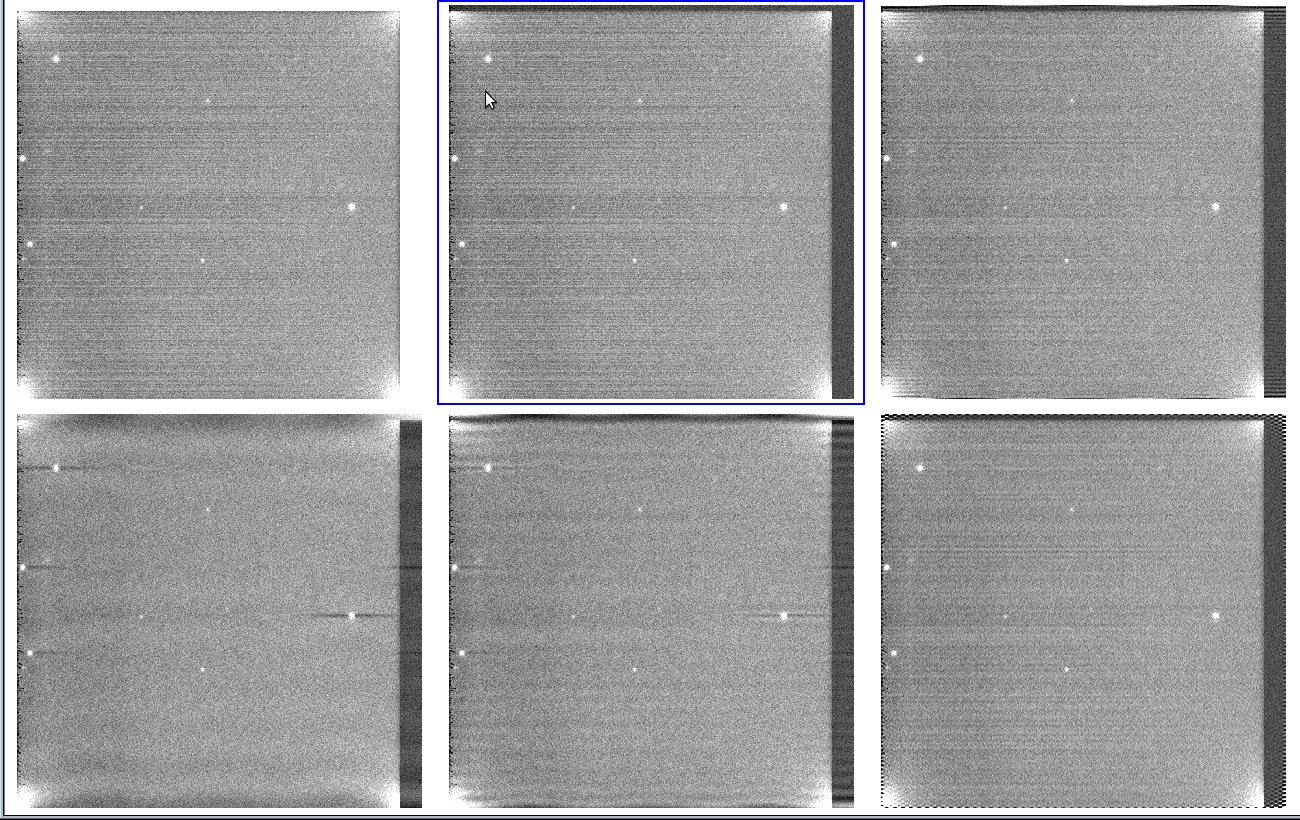
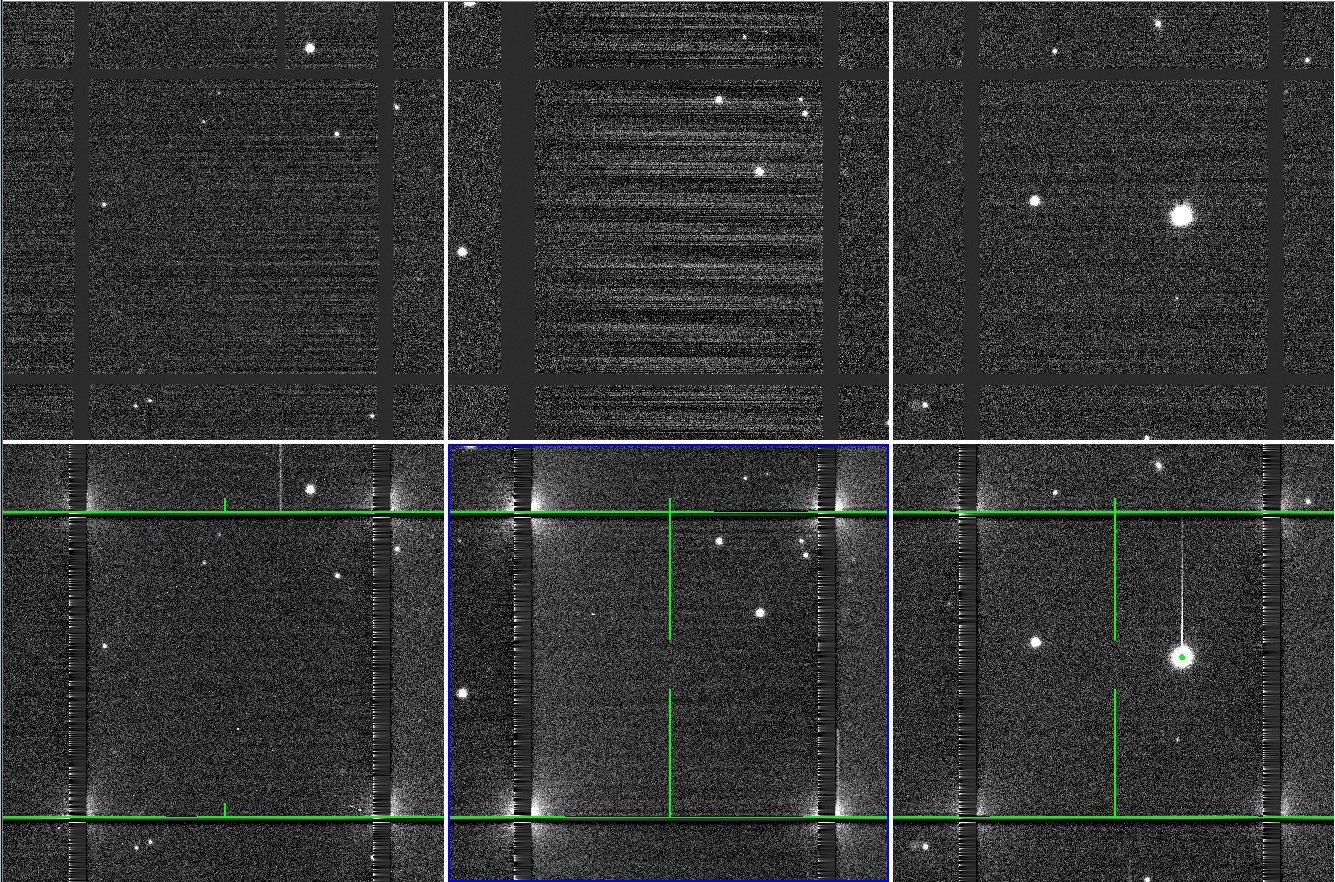
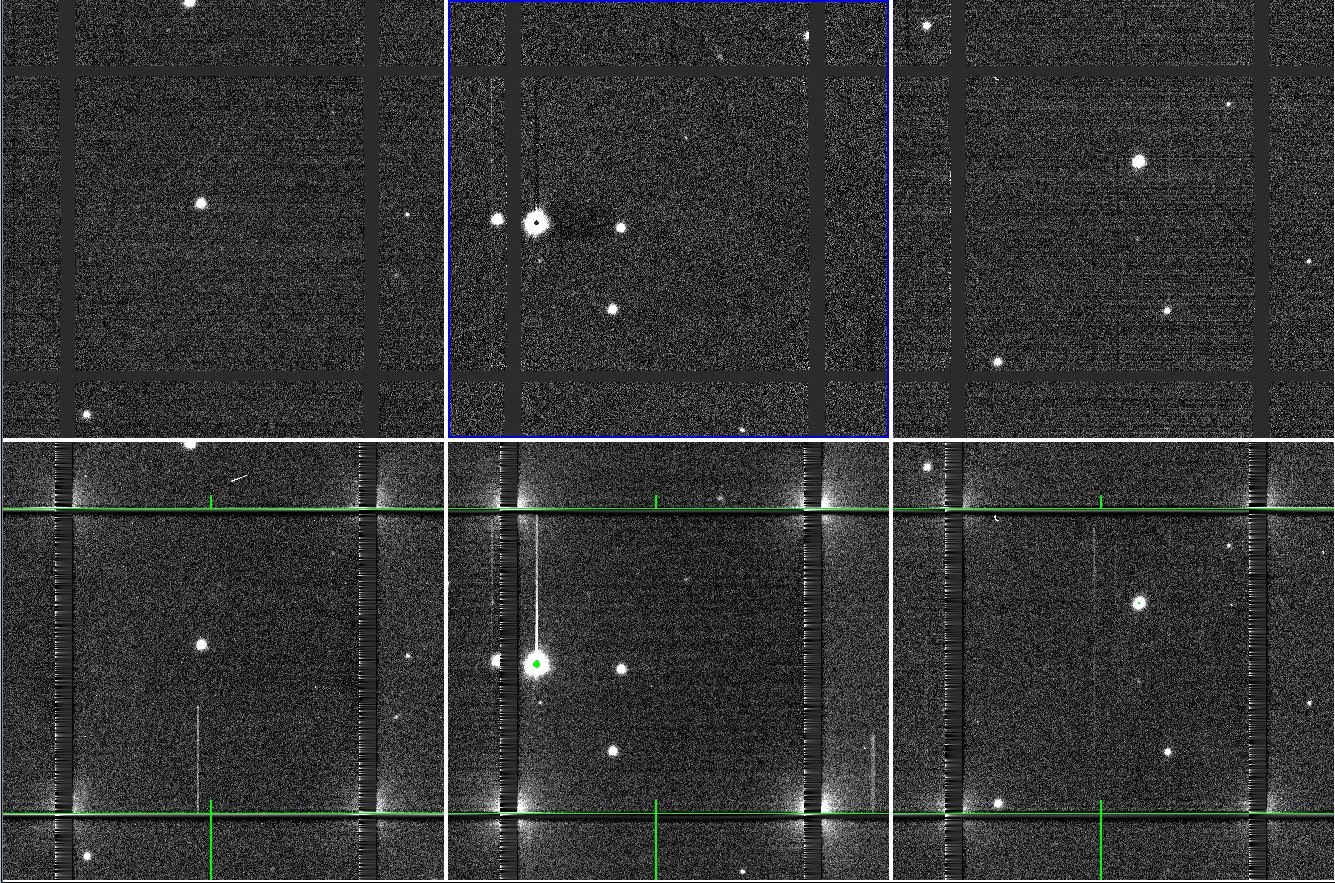
Two OTAs were chosen for study, OTA33 (the "good" OTA), and OTA67 (the "bad" OTA). These two were selected based on the row-by-row bias properties that have been noticed before. A variety of cells on the OTA were checked, all of which seem to have similar results, so cell xy01 is presented here. A bias exposure was selected more or less at random, and the FFT calculated.
Attachments (21)
- bias_comp1.png (17.2 KB ) - added by 14 years ago.
- bias_comp2.png (16.7 KB ) - added by 14 years ago.
- bias_diff.png (10.5 KB ) - added by 14 years ago.
- science_comp_low.png (18.1 KB ) - added by 14 years ago.
- science_comp_high.png (17.9 KB ) - added by 14 years ago.
- bias_impow.png (1.0 MB ) - added by 14 years ago.
- science_impow.png (983.9 KB ) - added by 14 years ago.
- raw_XY27.jpg (107.9 KB ) - added by 13 years ago.
- diff_XY27.jpg (166.5 KB ) - added by 13 years ago.
- chip_XY27.jpg (160.2 KB ) - added by 13 years ago.
- pow_raw_A.jpg (75.9 KB ) - added by 13 years ago.
- pow_chip_A.jpg (82.3 KB ) - added by 13 years ago.
- pow_diff_A.jpg (82.0 KB ) - added by 13 years ago.
- pow_diff_C.jpg (82.0 KB ) - added by 13 years ago.
- pow_chip_C.jpg (82.5 KB ) - added by 13 years ago.
- pow_raw_C.jpg (82.1 KB ) - added by 13 years ago.
- pow_detdiff_A.jpg (62.0 KB ) - added by 13 years ago.
- pow_detdiff_C.jpg (56.4 KB ) - added by 13 years ago.
- test_code_results.jpg (392.7 KB ) - added by 13 years ago.
- r2r.jpg (554.3 KB ) - added by 13 years ago.
- r2r_butterfly.jpg (562.5 KB ) - added by 13 years ago.