| Version 3 (modified by , 14 years ago) ( diff ) |
|---|
"Complete" comparison study (2012-11-09)
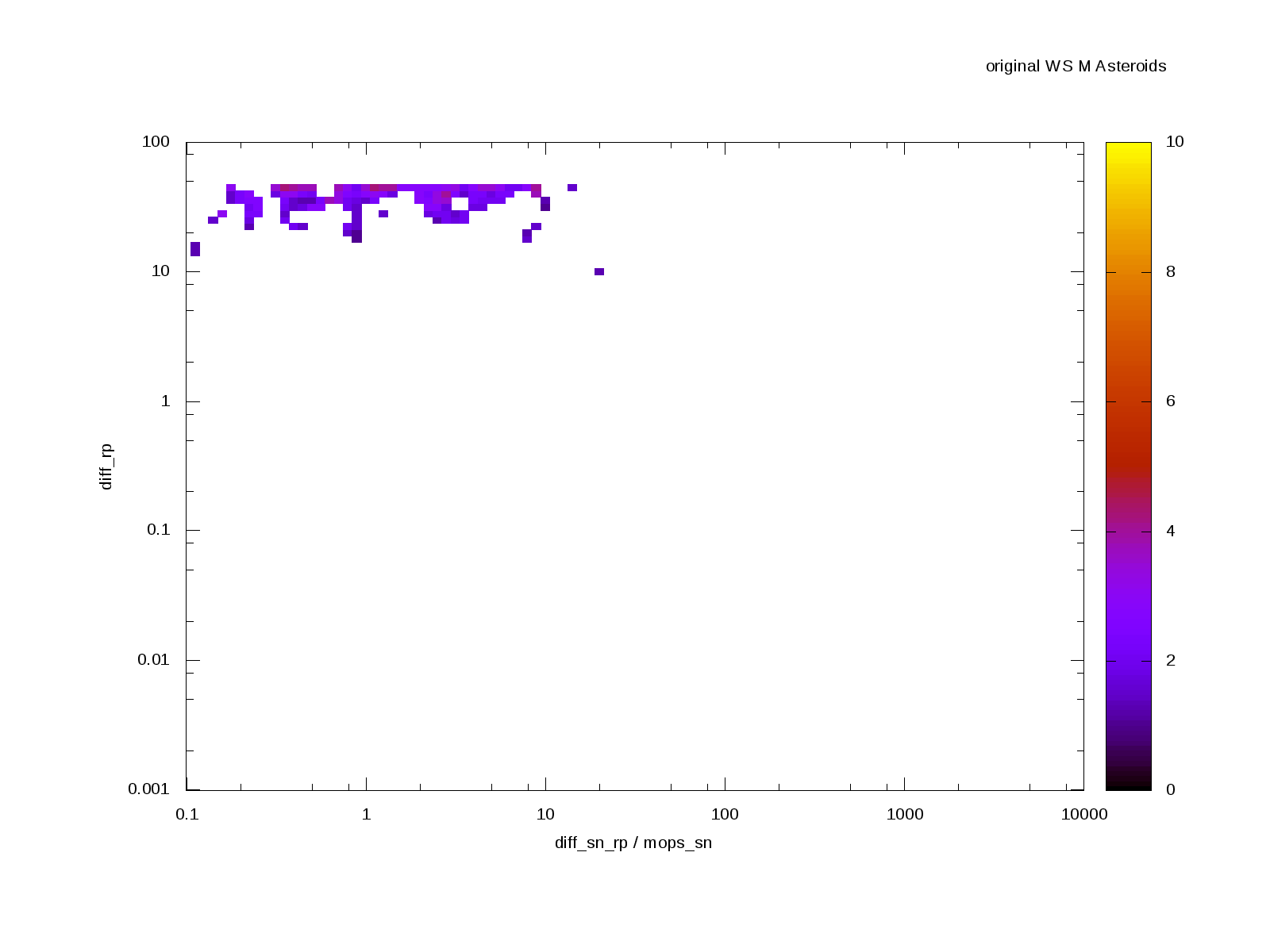
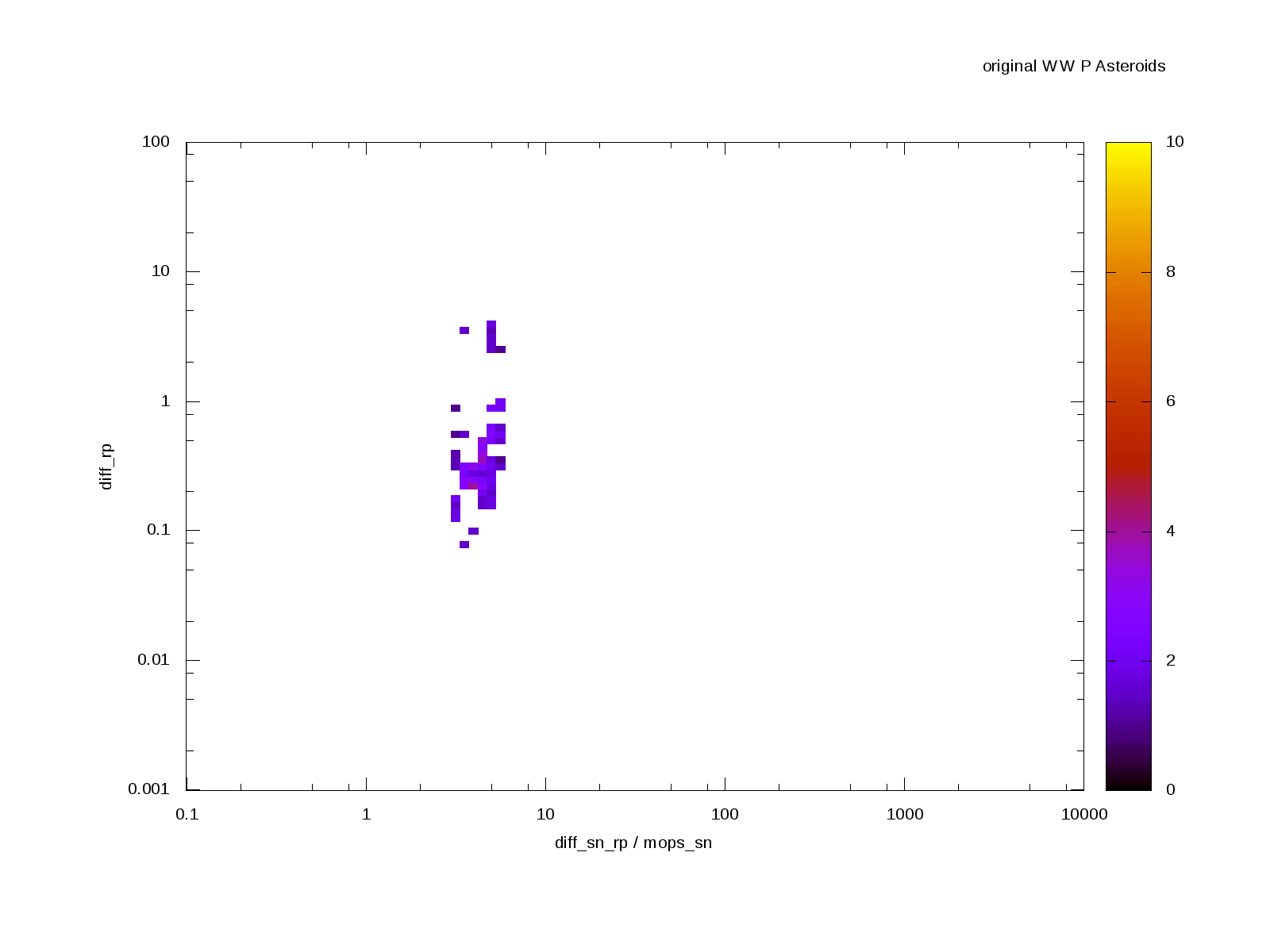
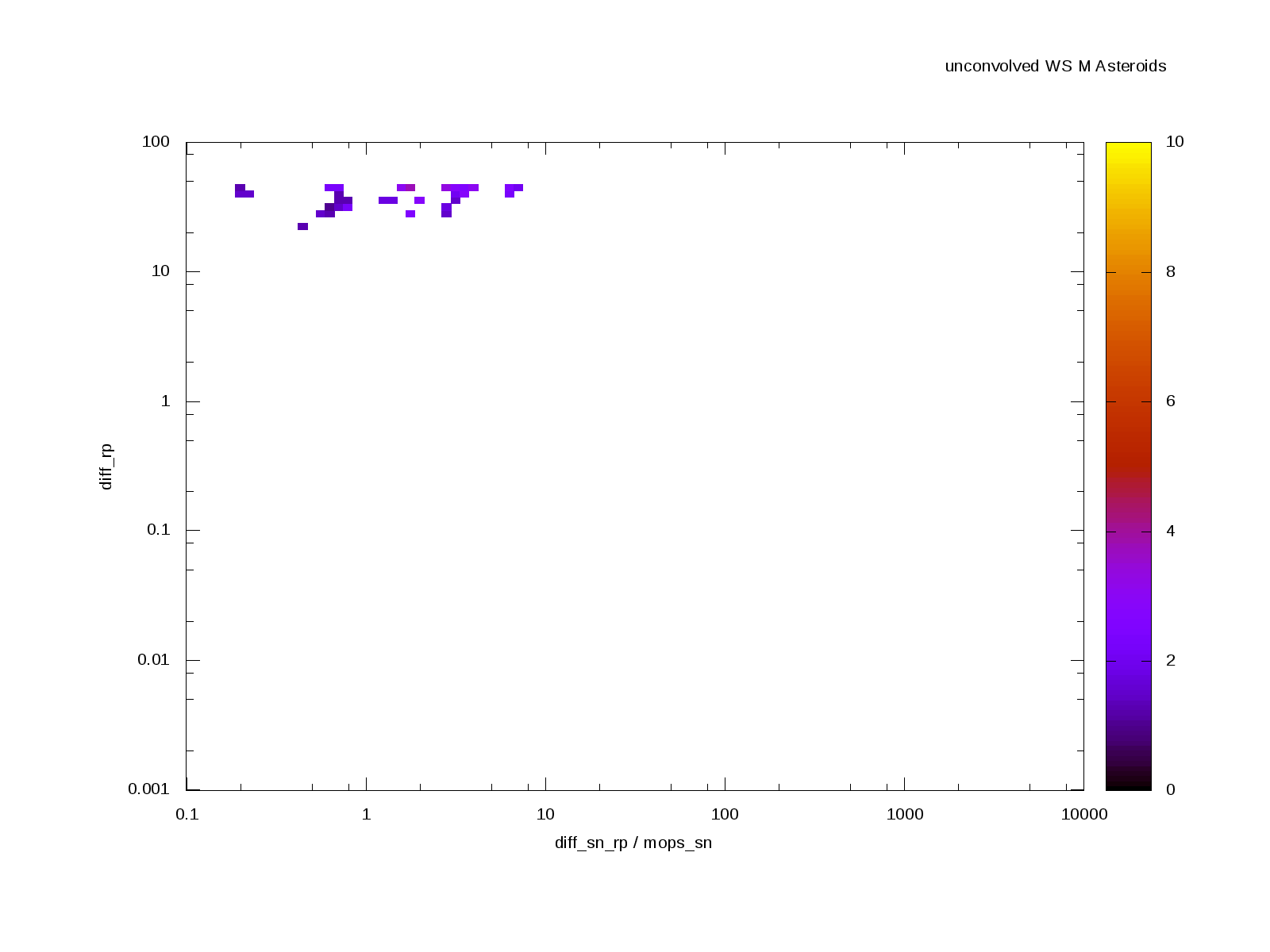
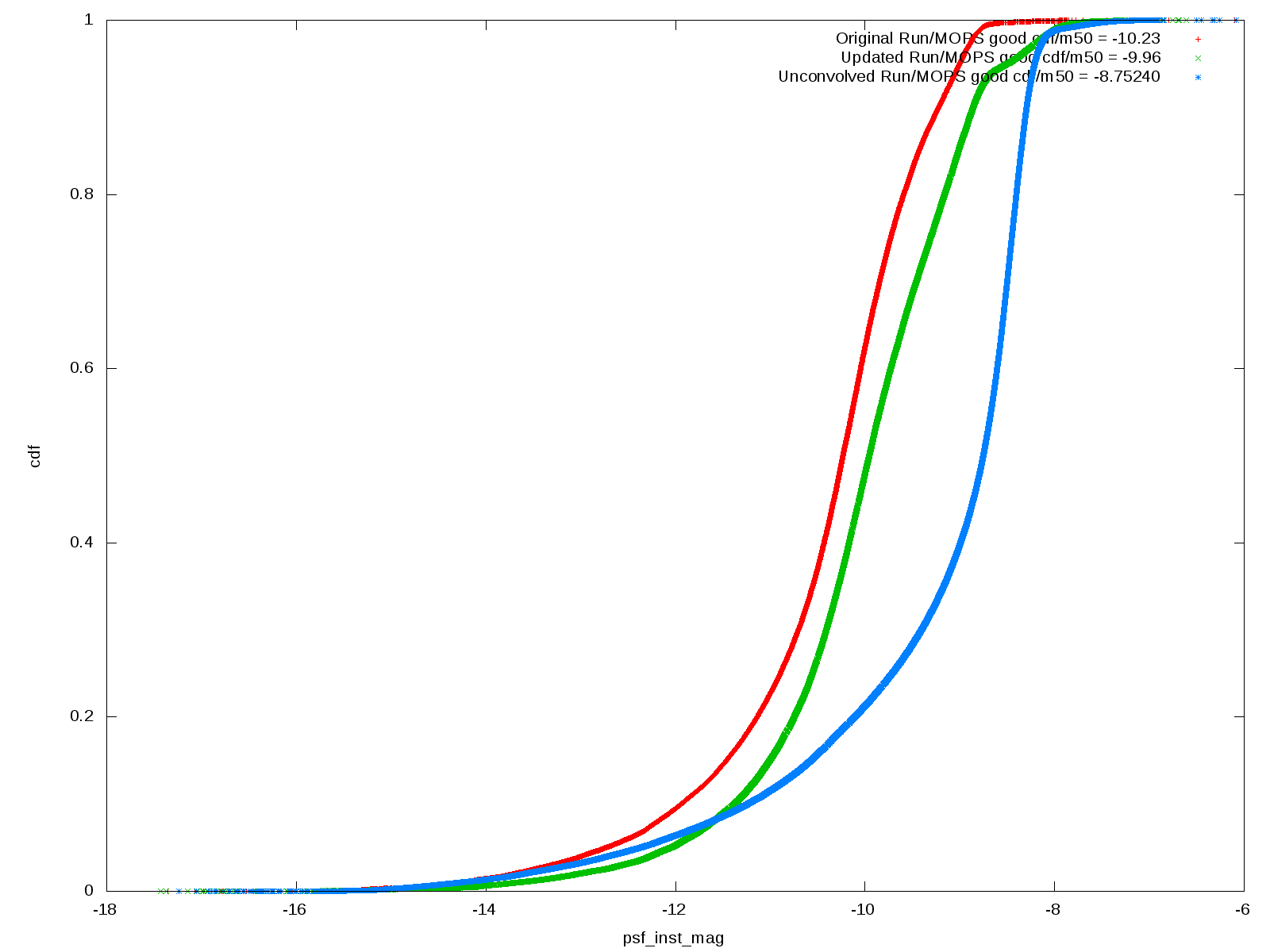
I've reprocessed the OSS data from MJD 56164 (2012-08-25) using the new convolution recipe changes, and have compared these results against those obtained in the previous analysis that has already been delivered to MOPS. Because of this previous analysis, I have a list of real asteroid detections in these data, and have used those to guide the discussion of false positive rejection.
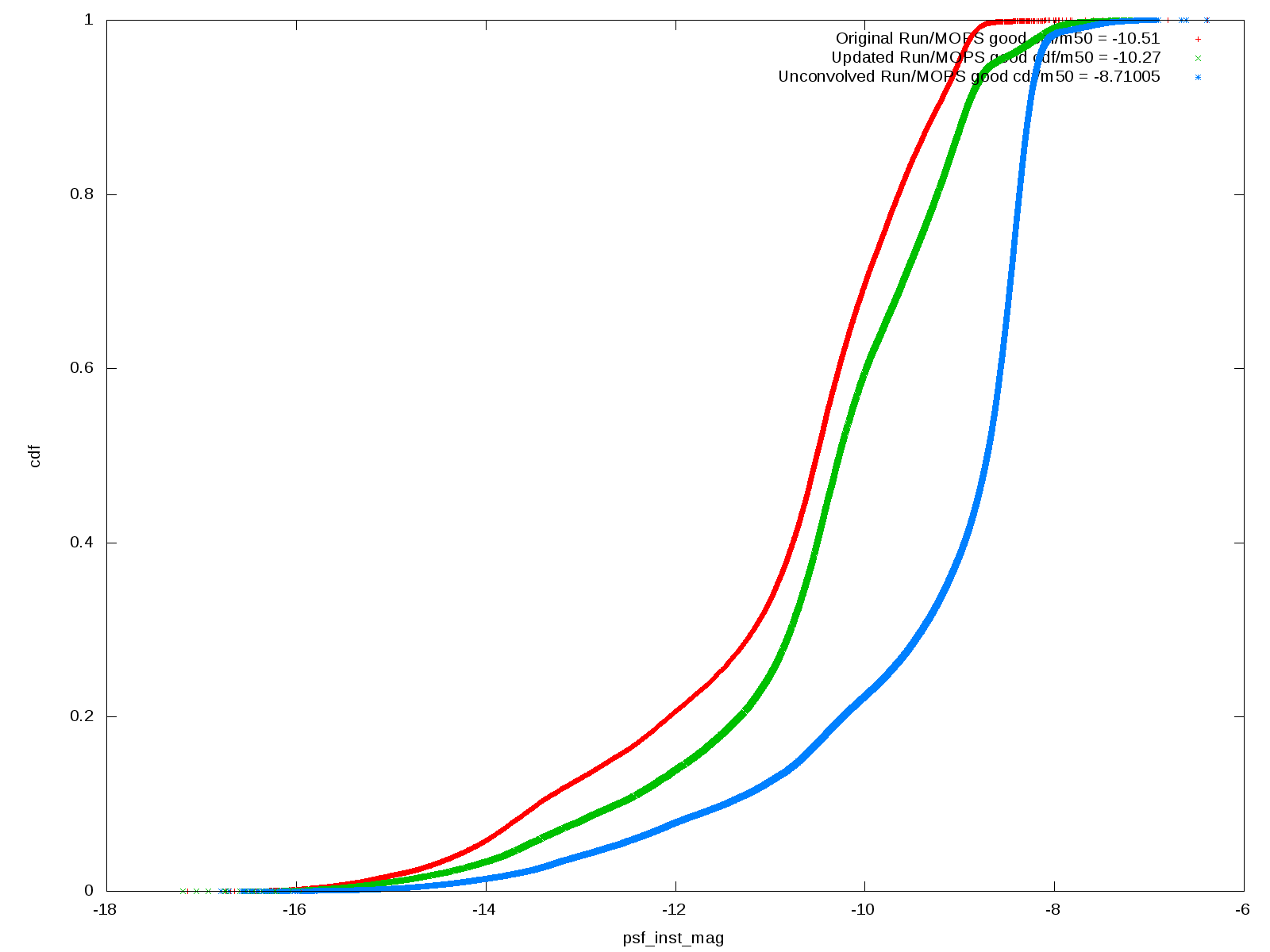
Changes in depth
| WW | WWI | WS |
 |  | 
|
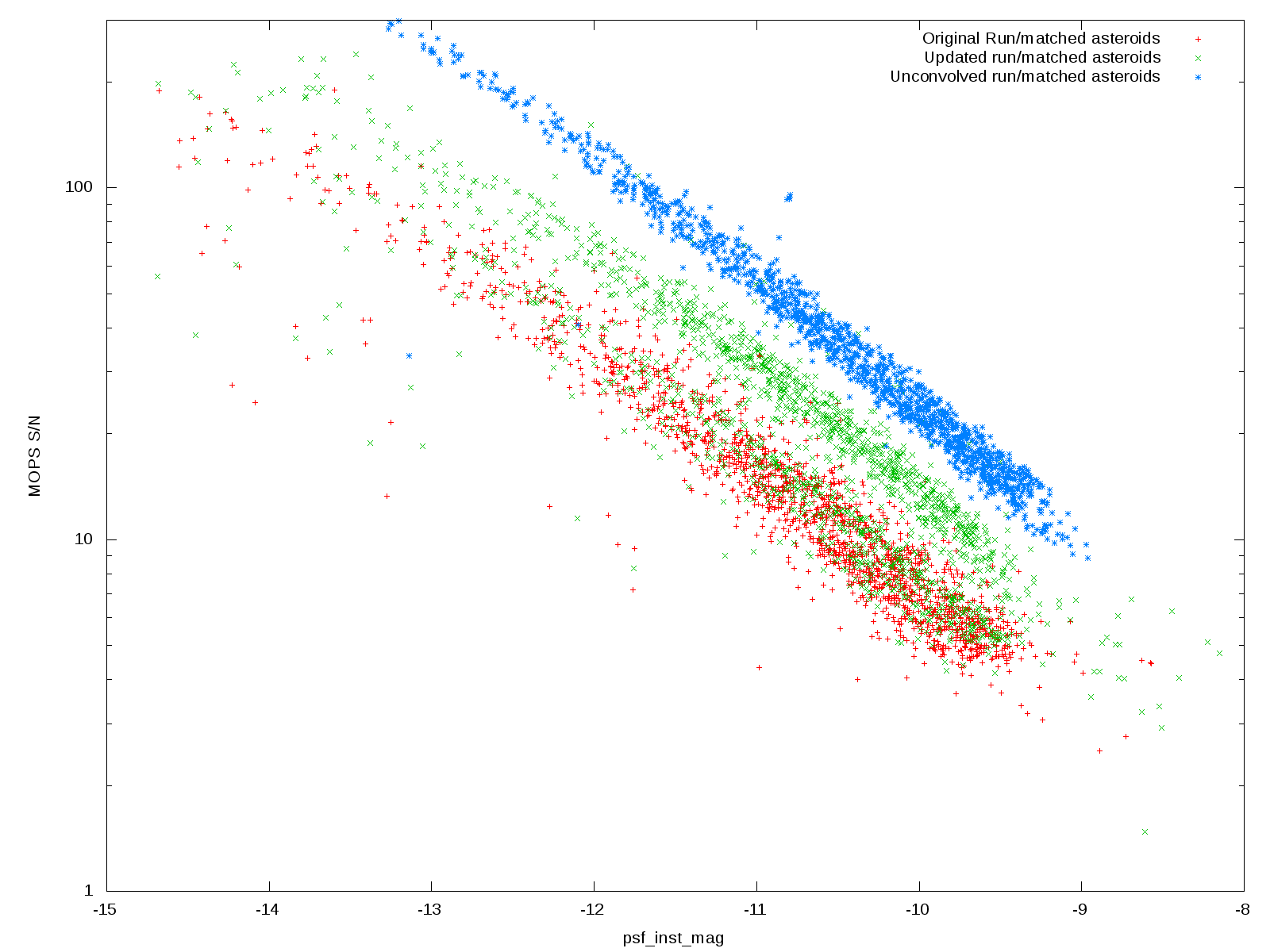
Changes in signal-to-noise
| WW | WWI | WS |
 |  | 
|
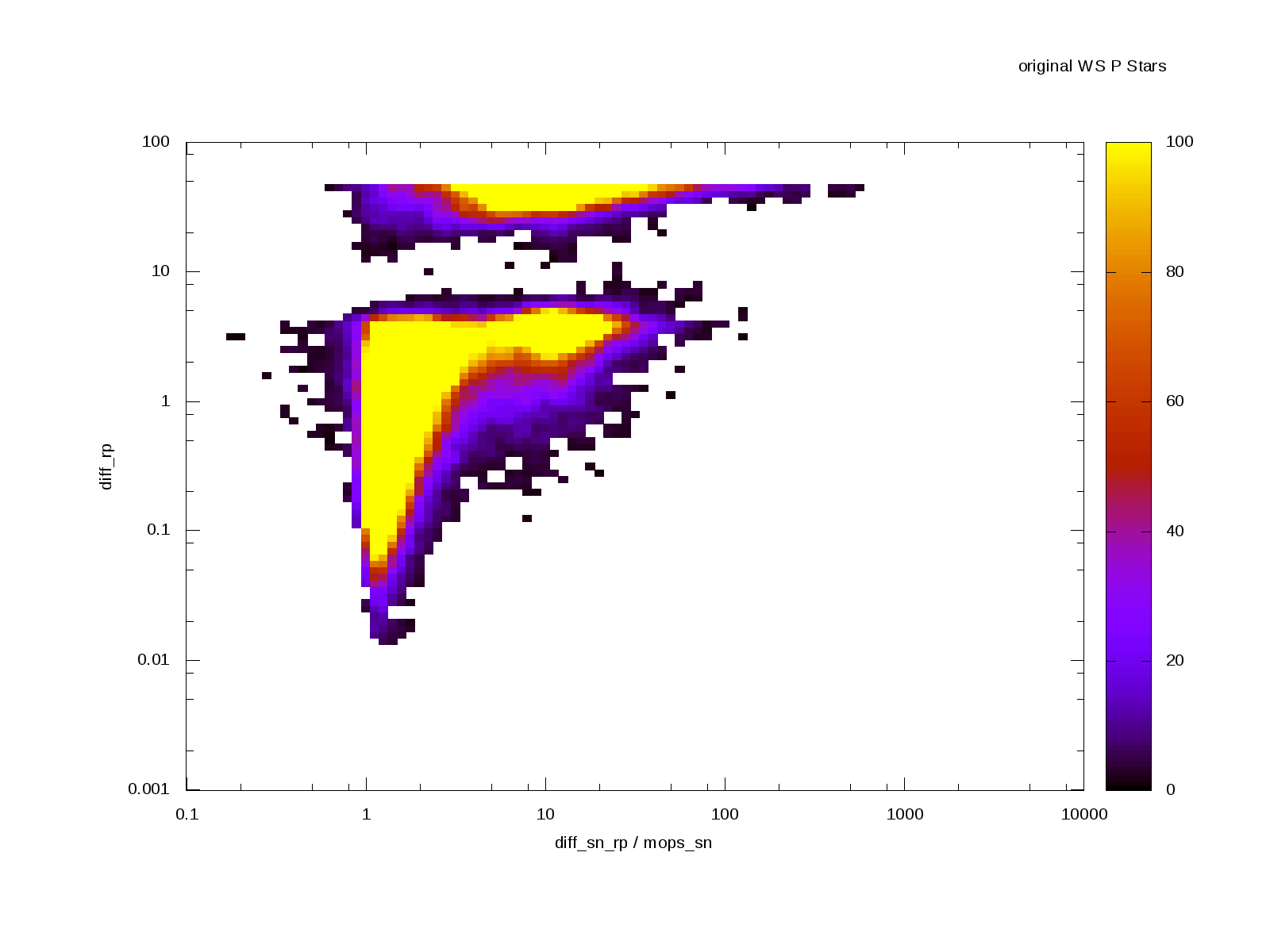
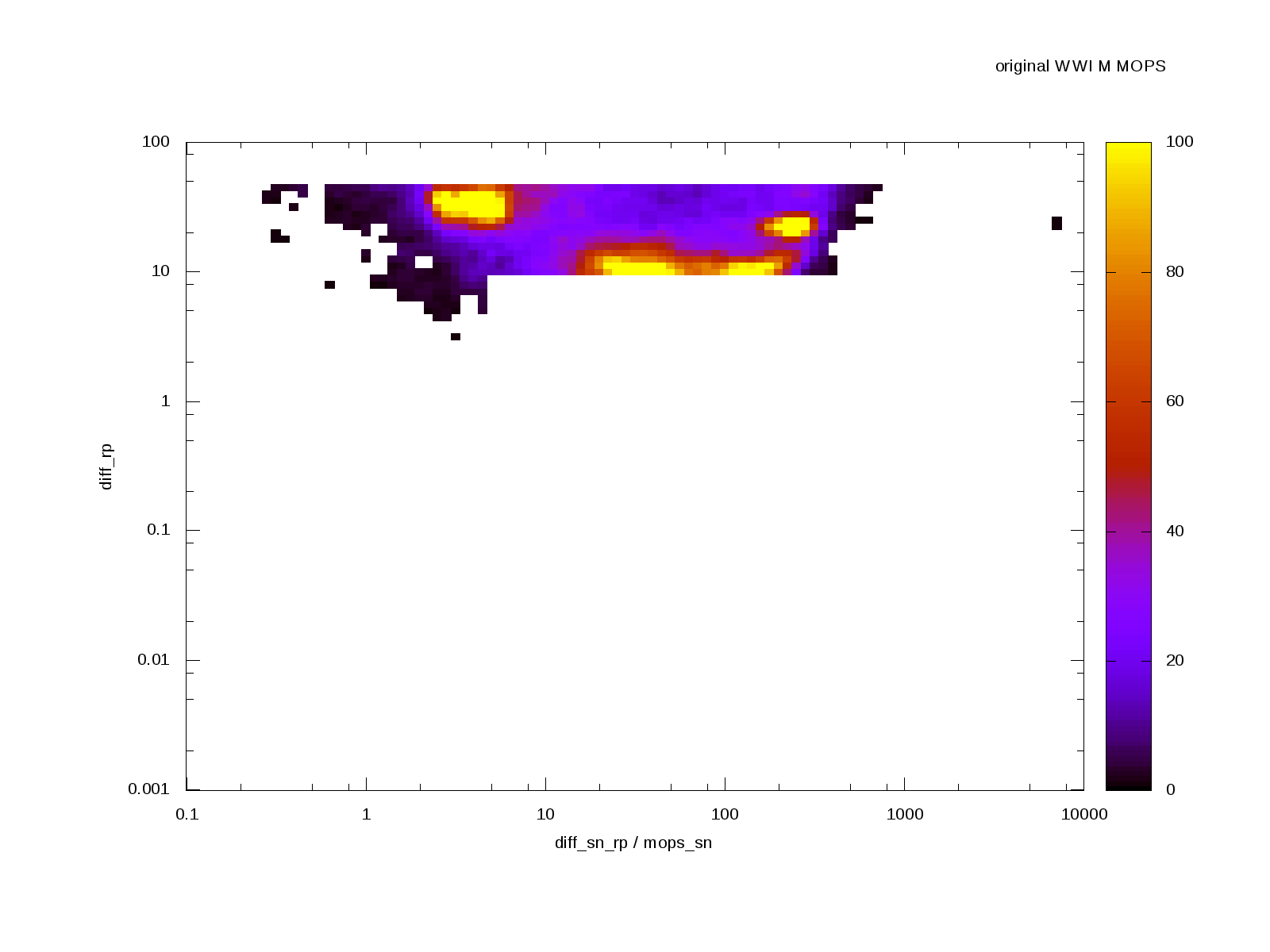
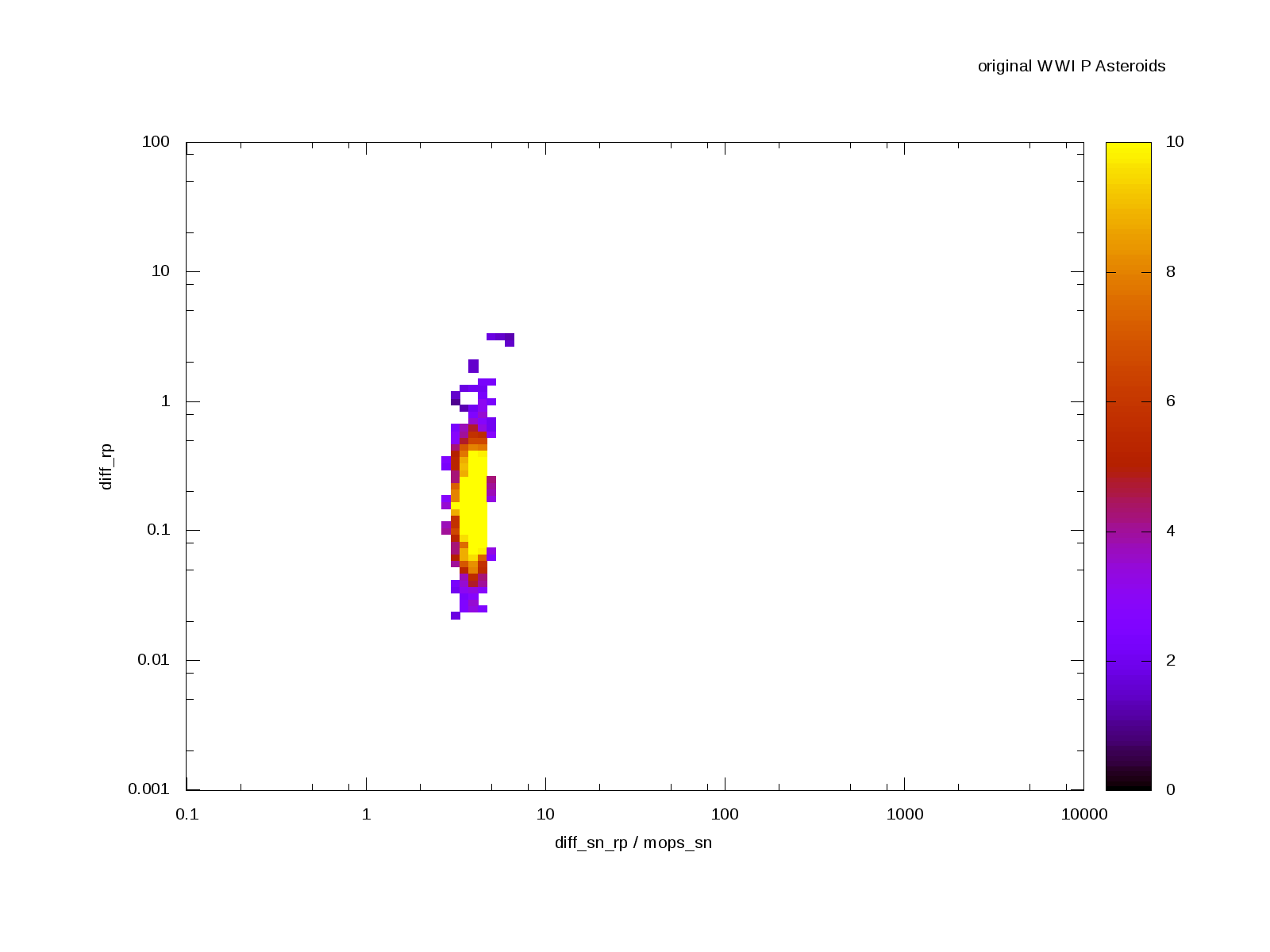
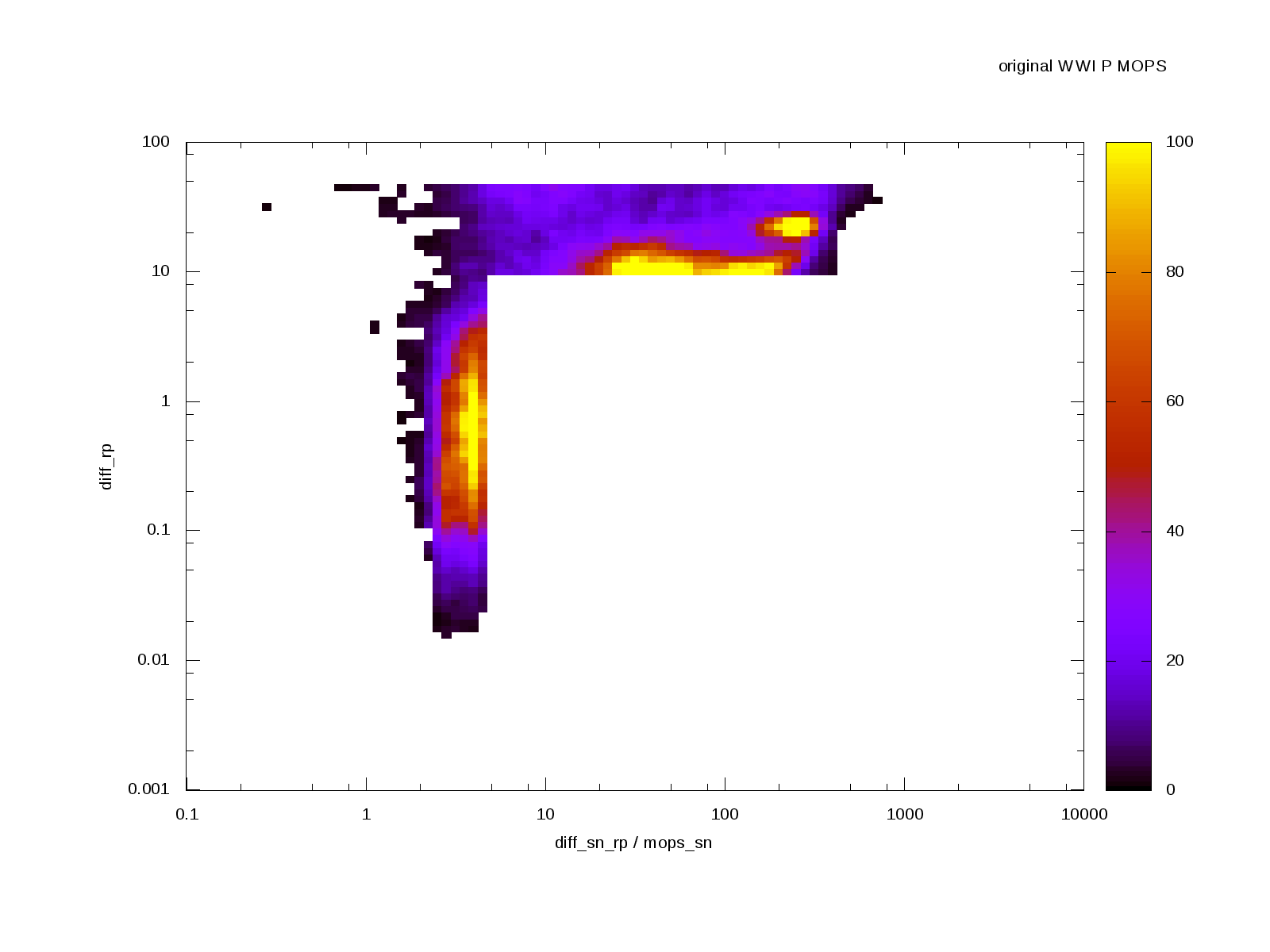
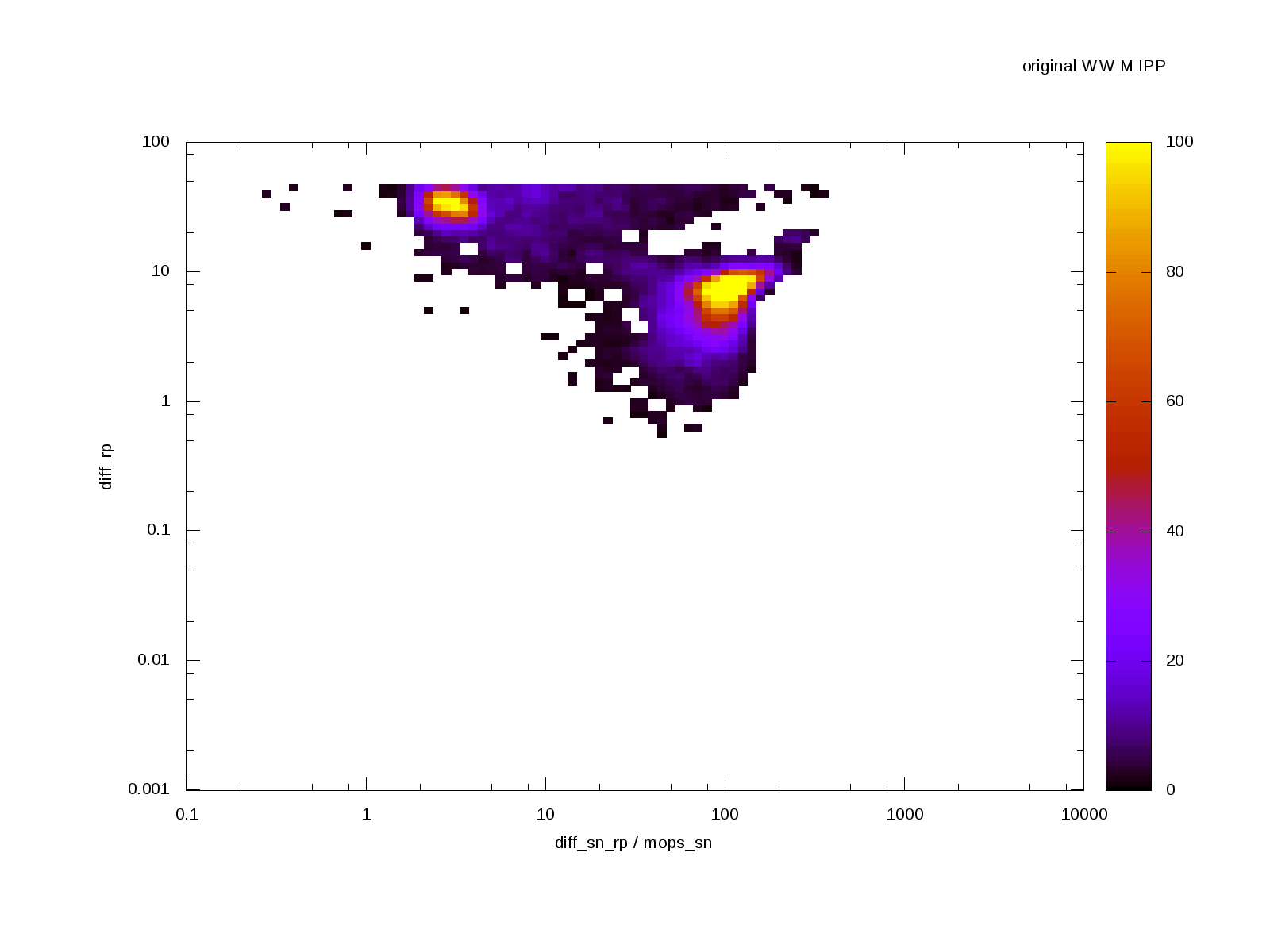
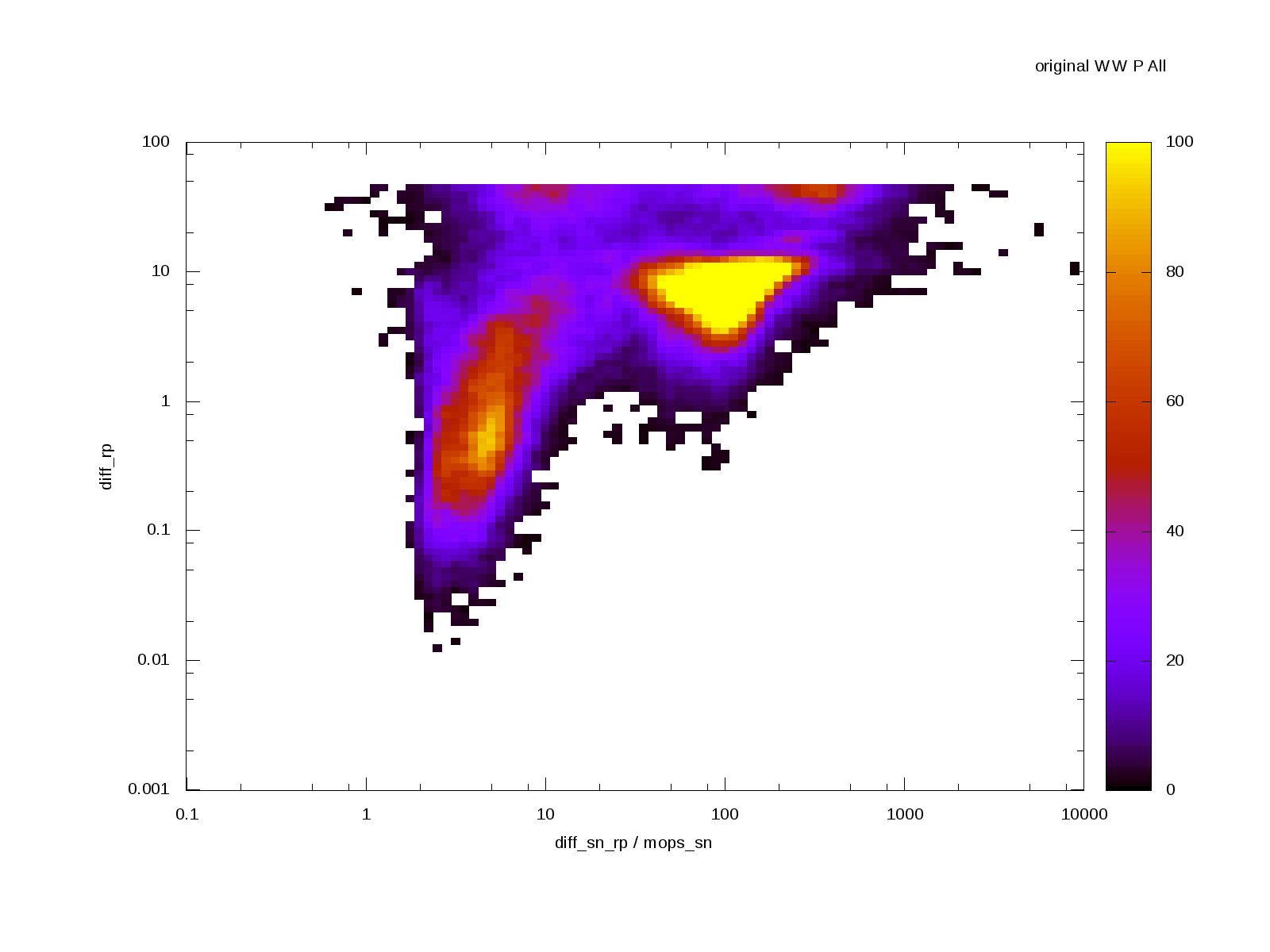
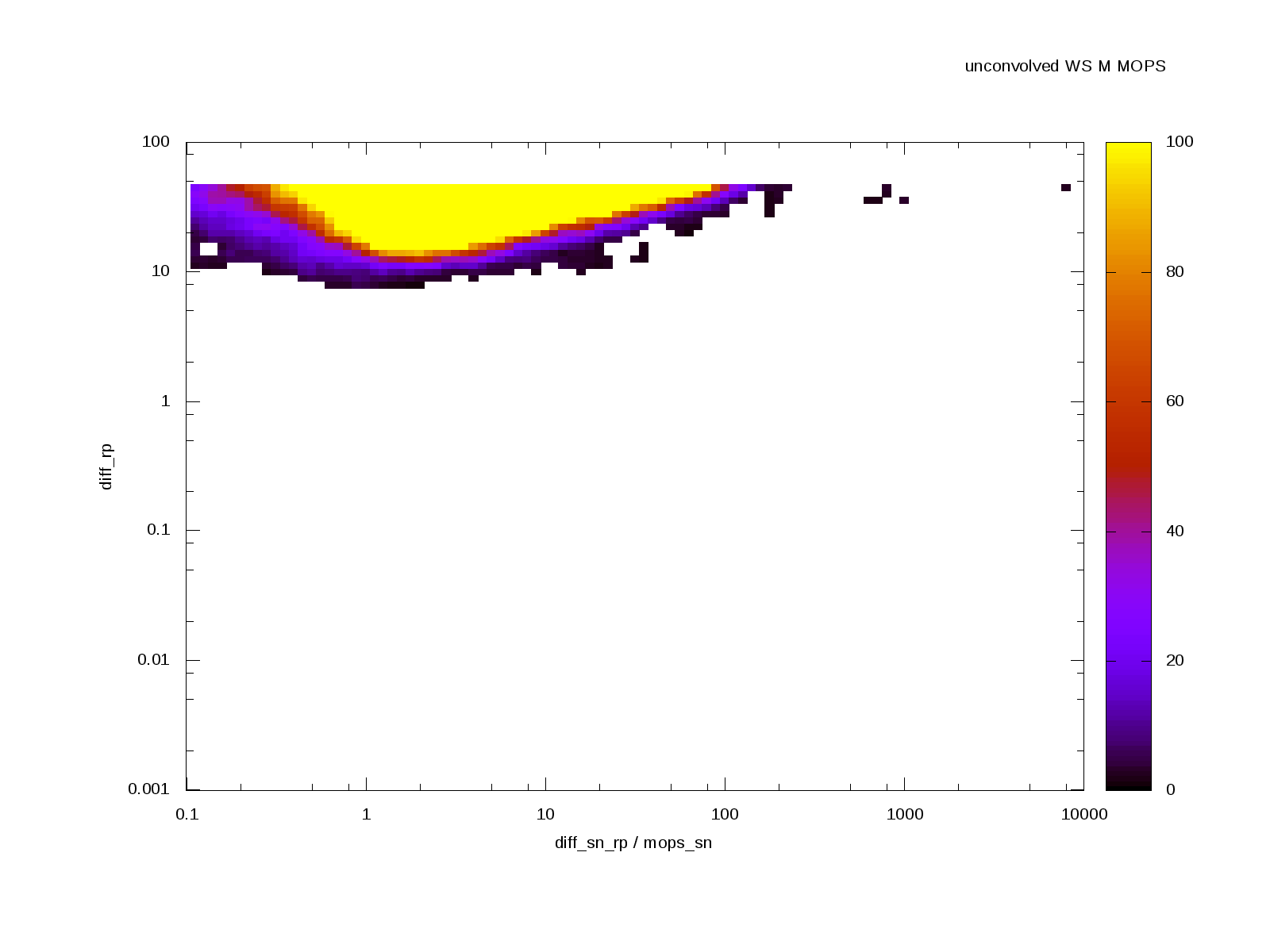
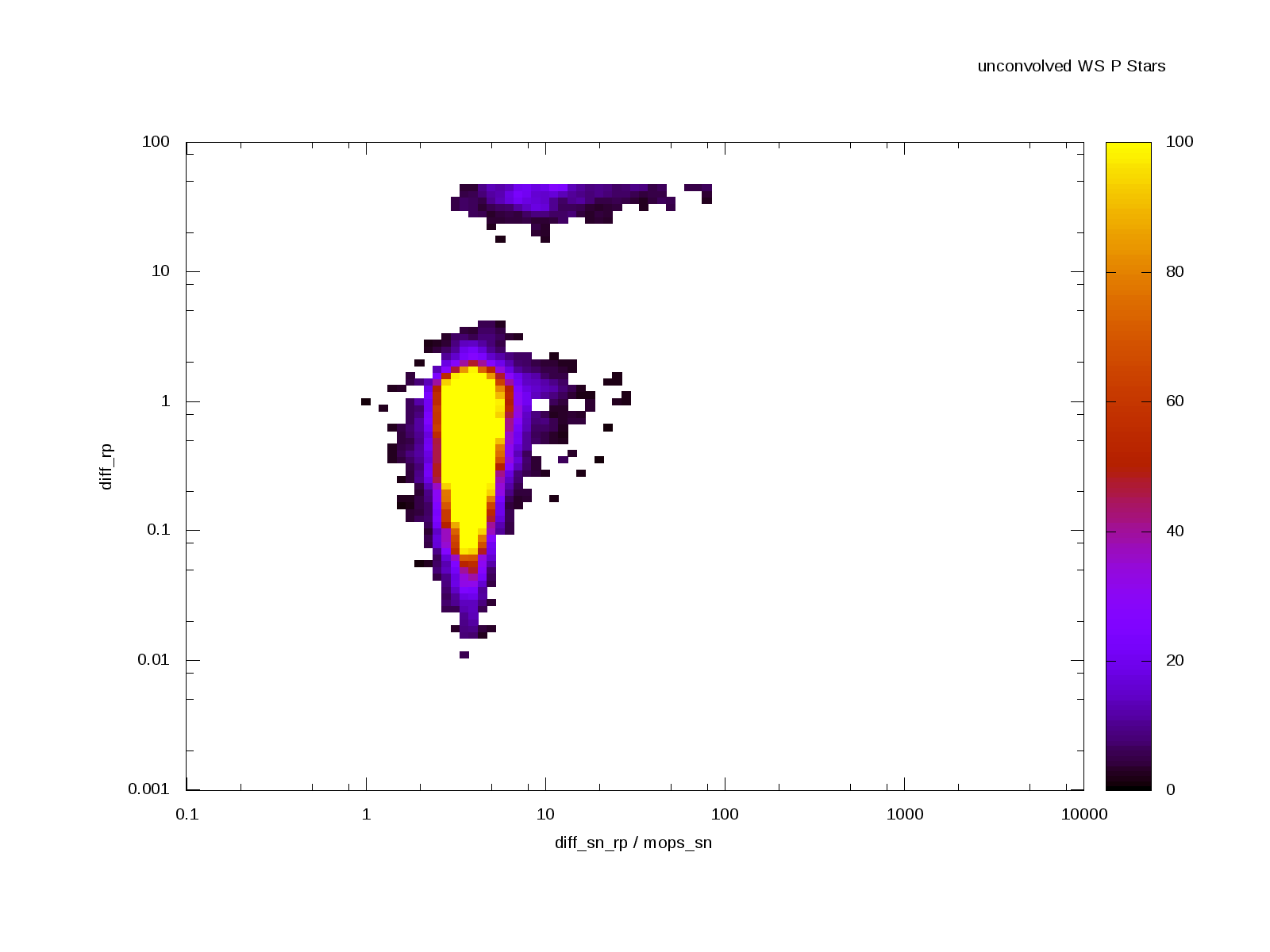
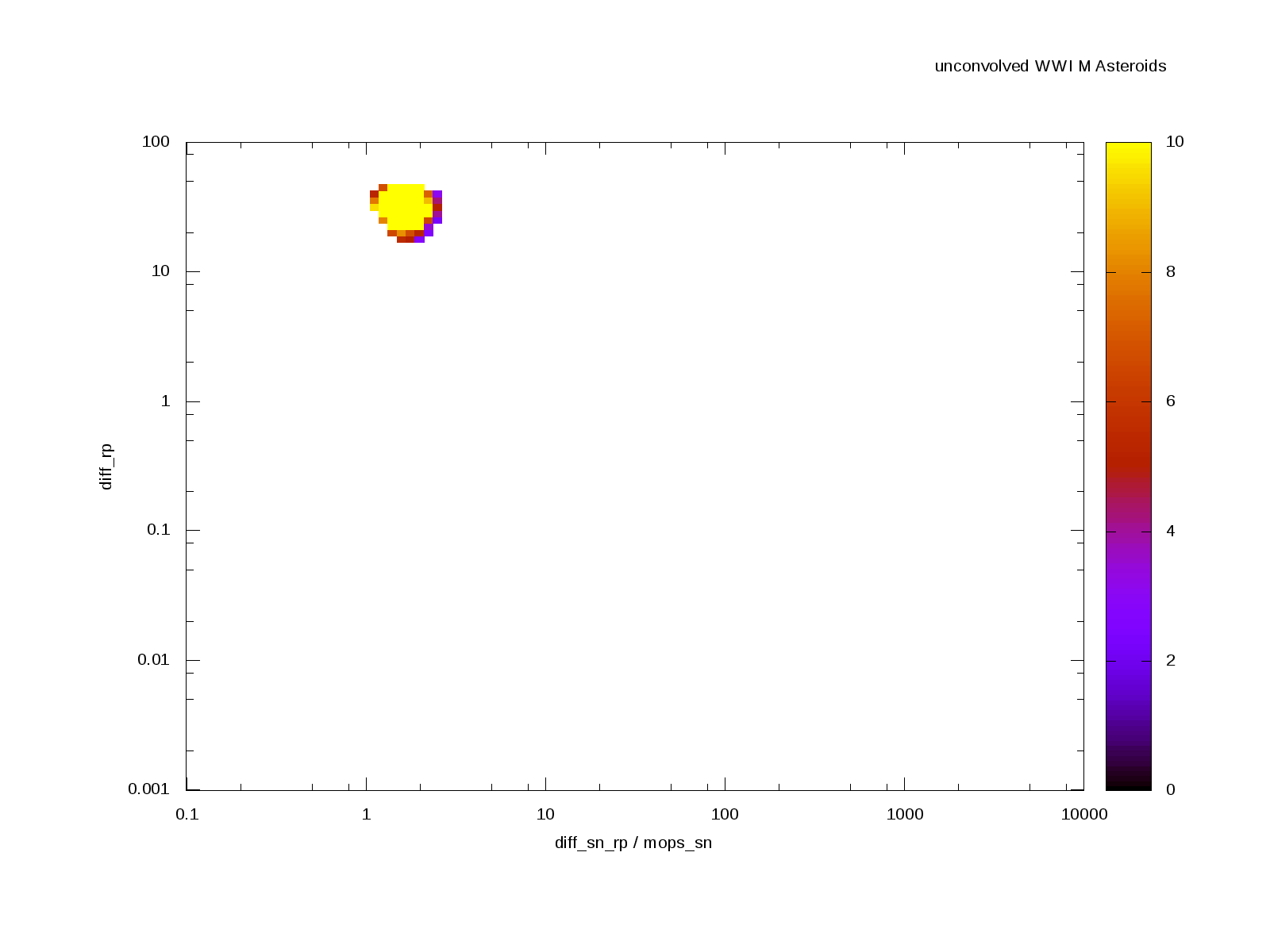
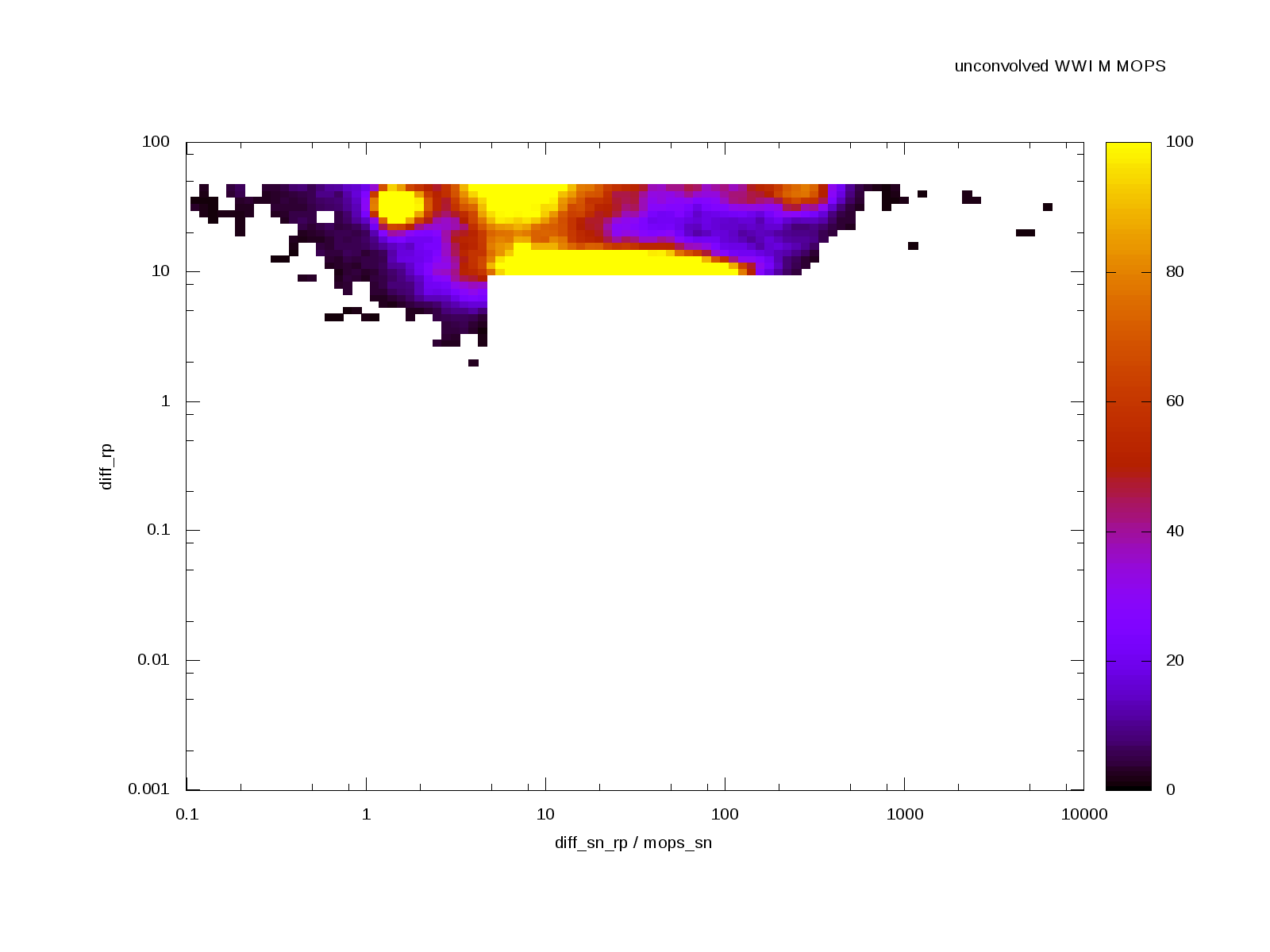
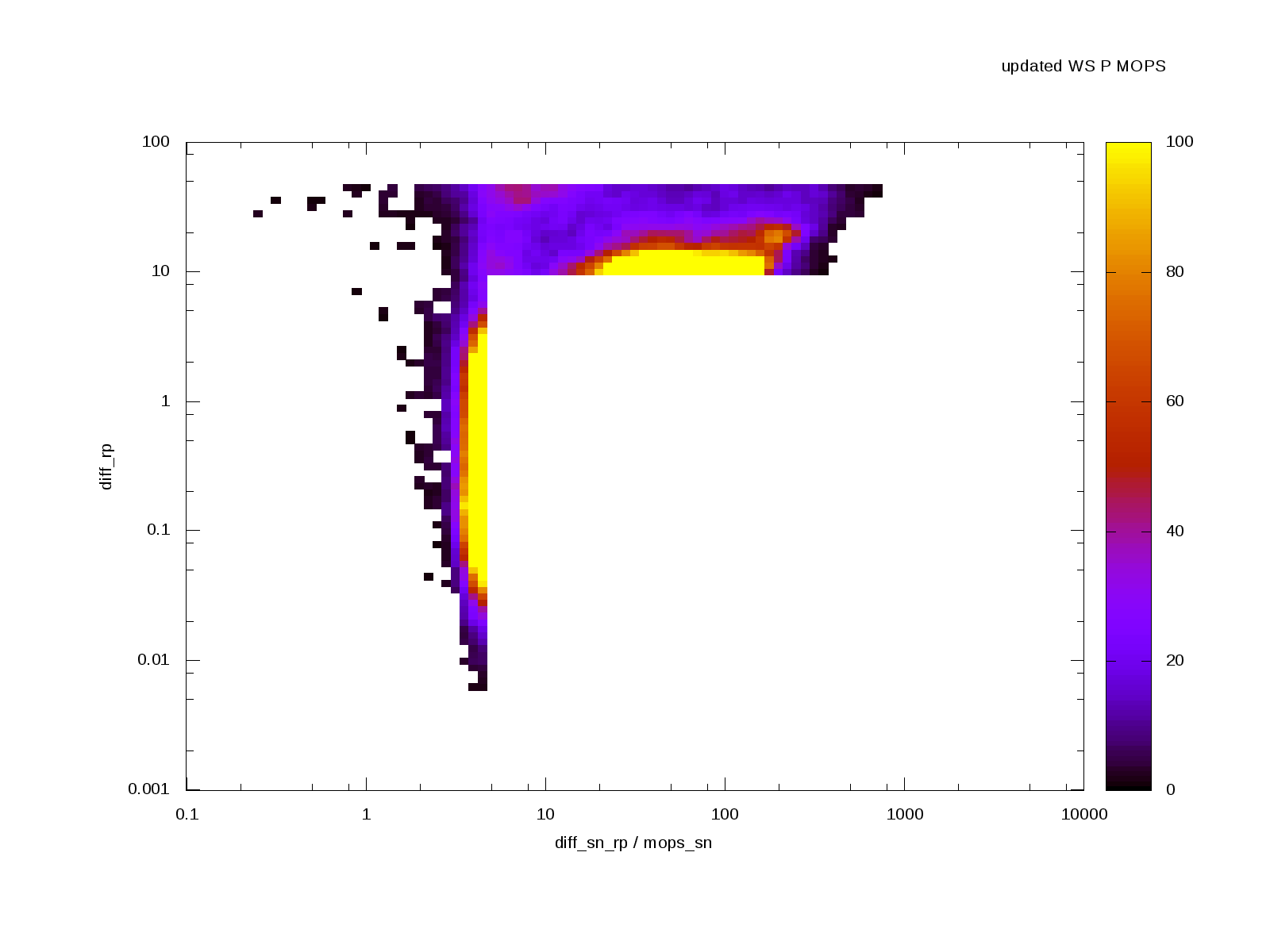
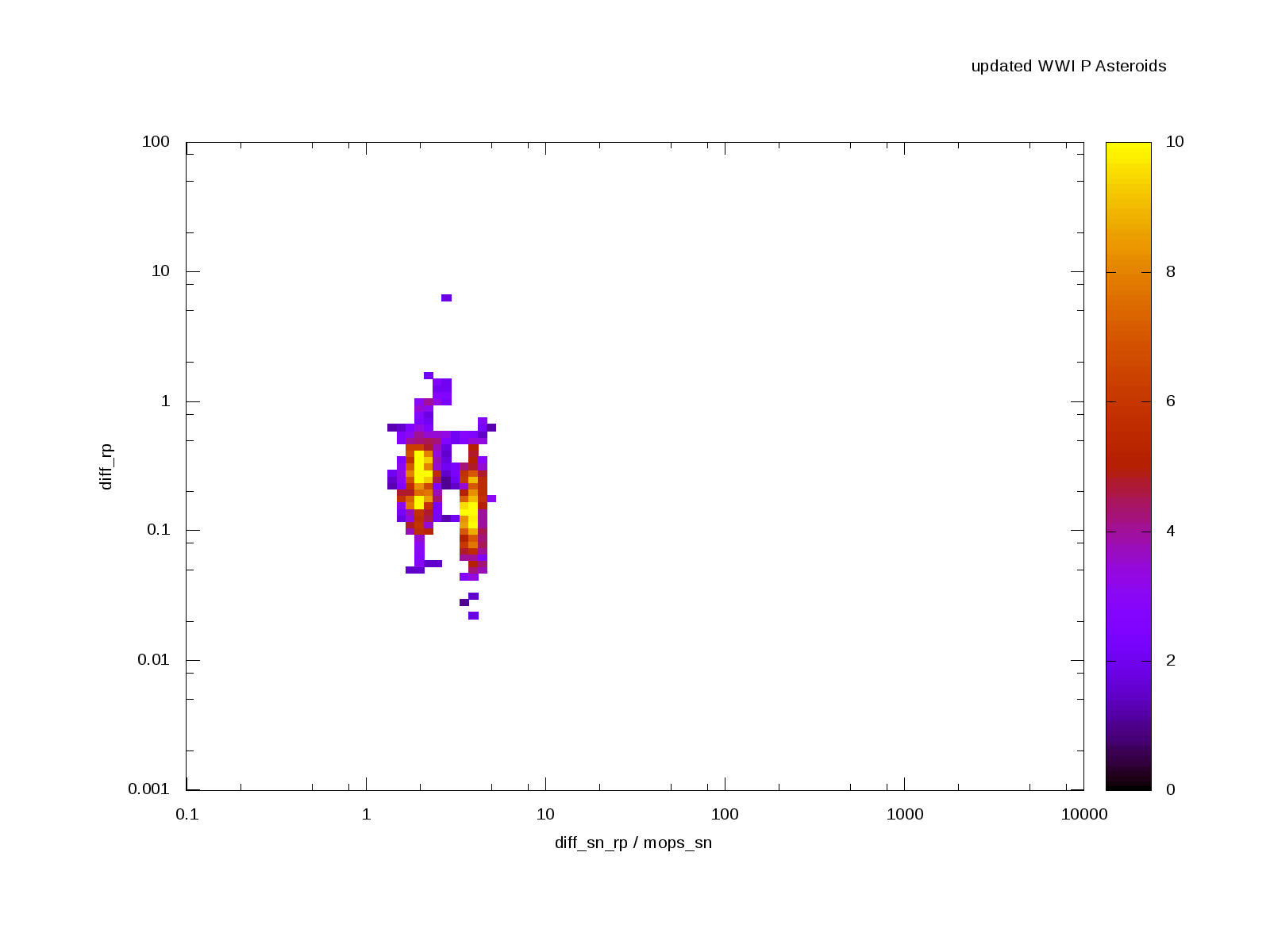
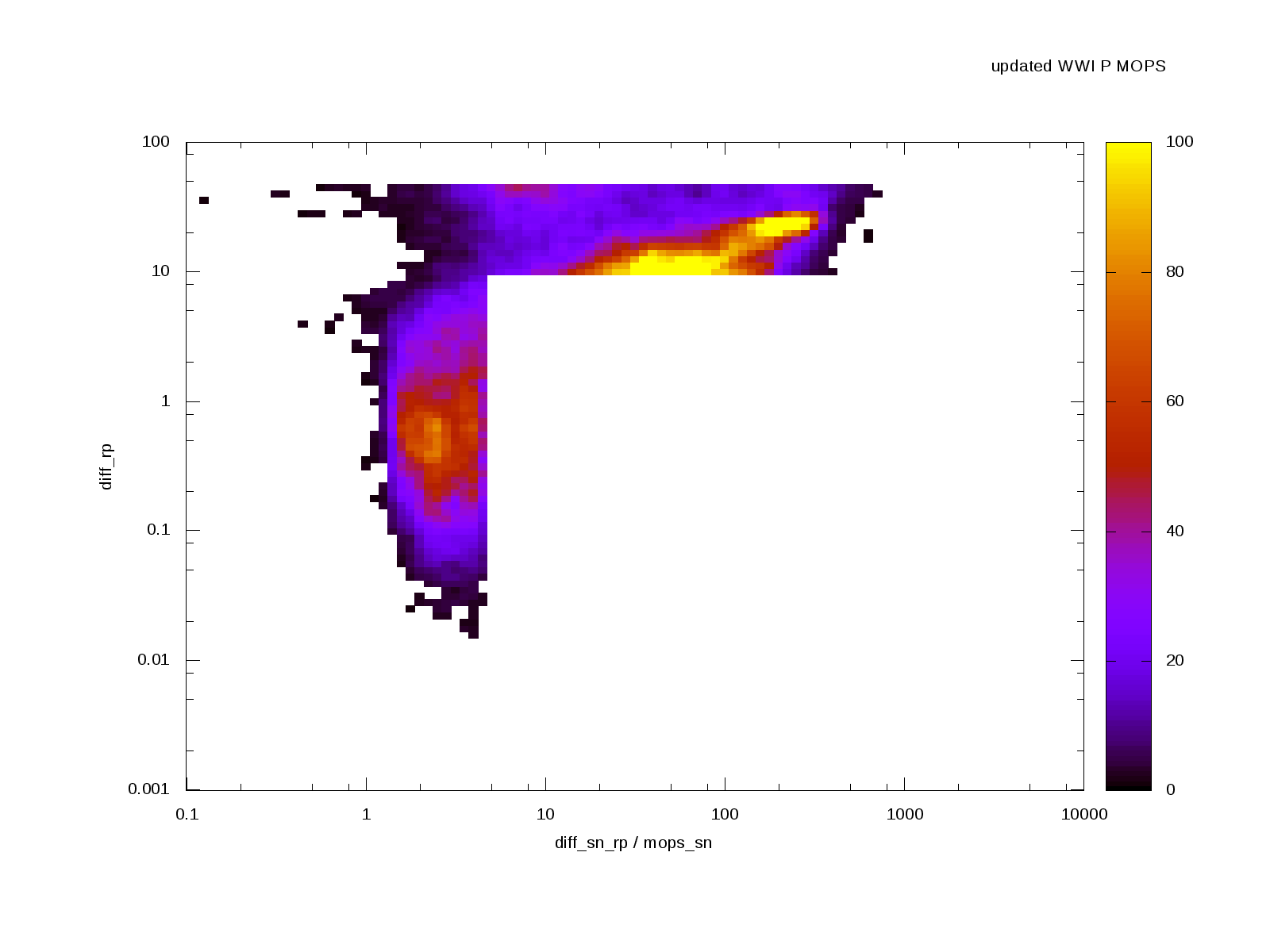
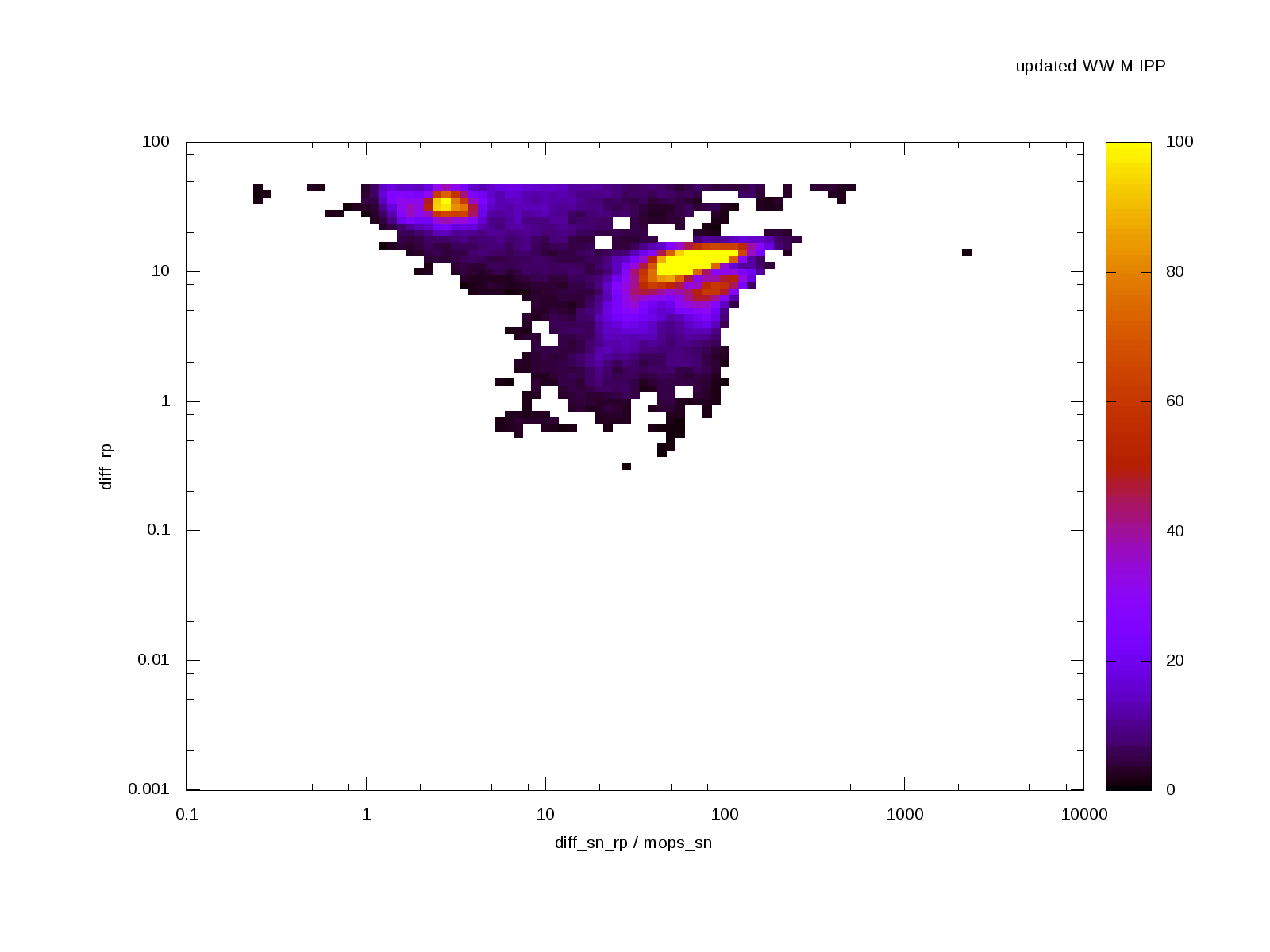
Accuracy of SINGLE1 convolution

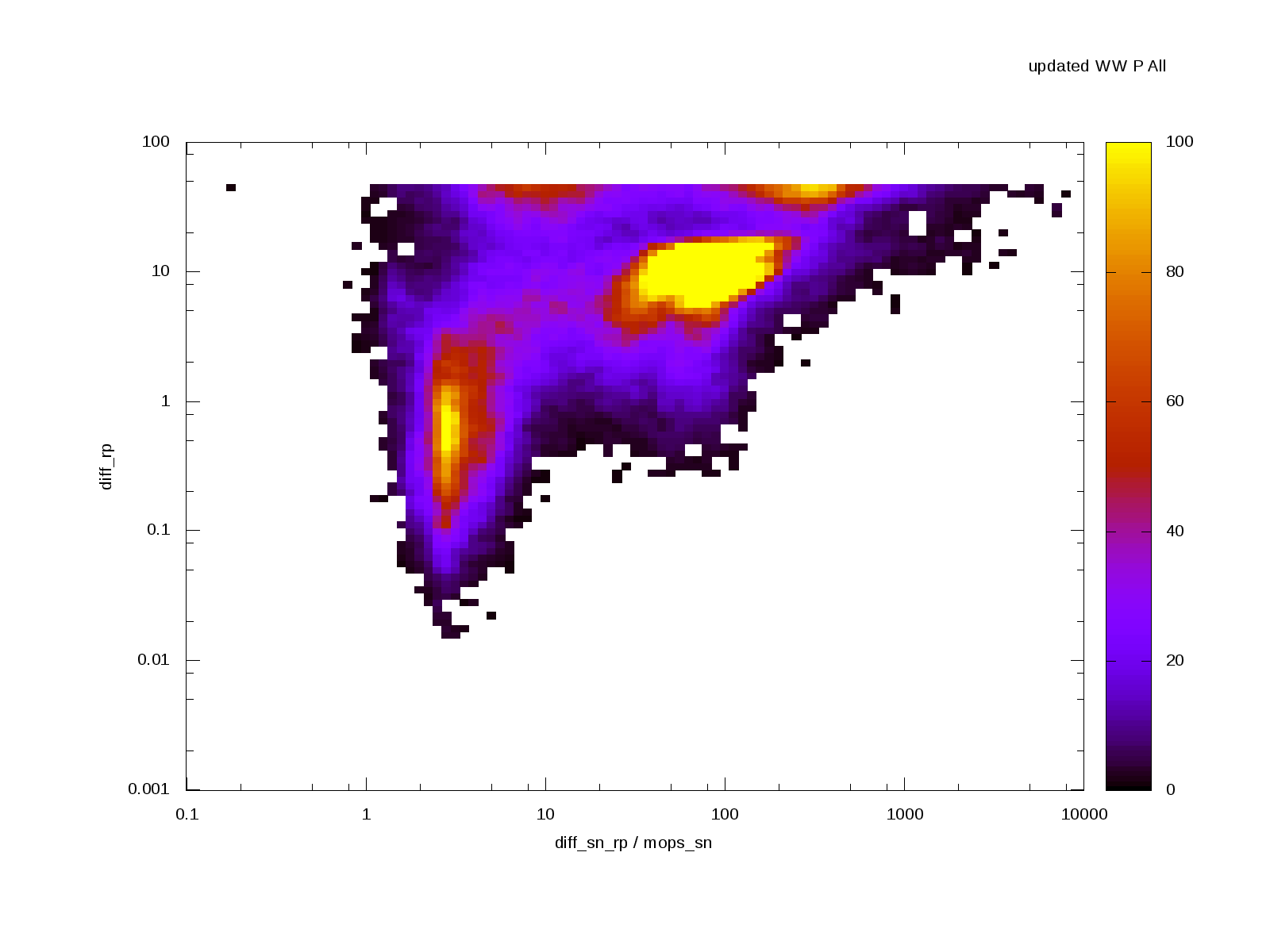
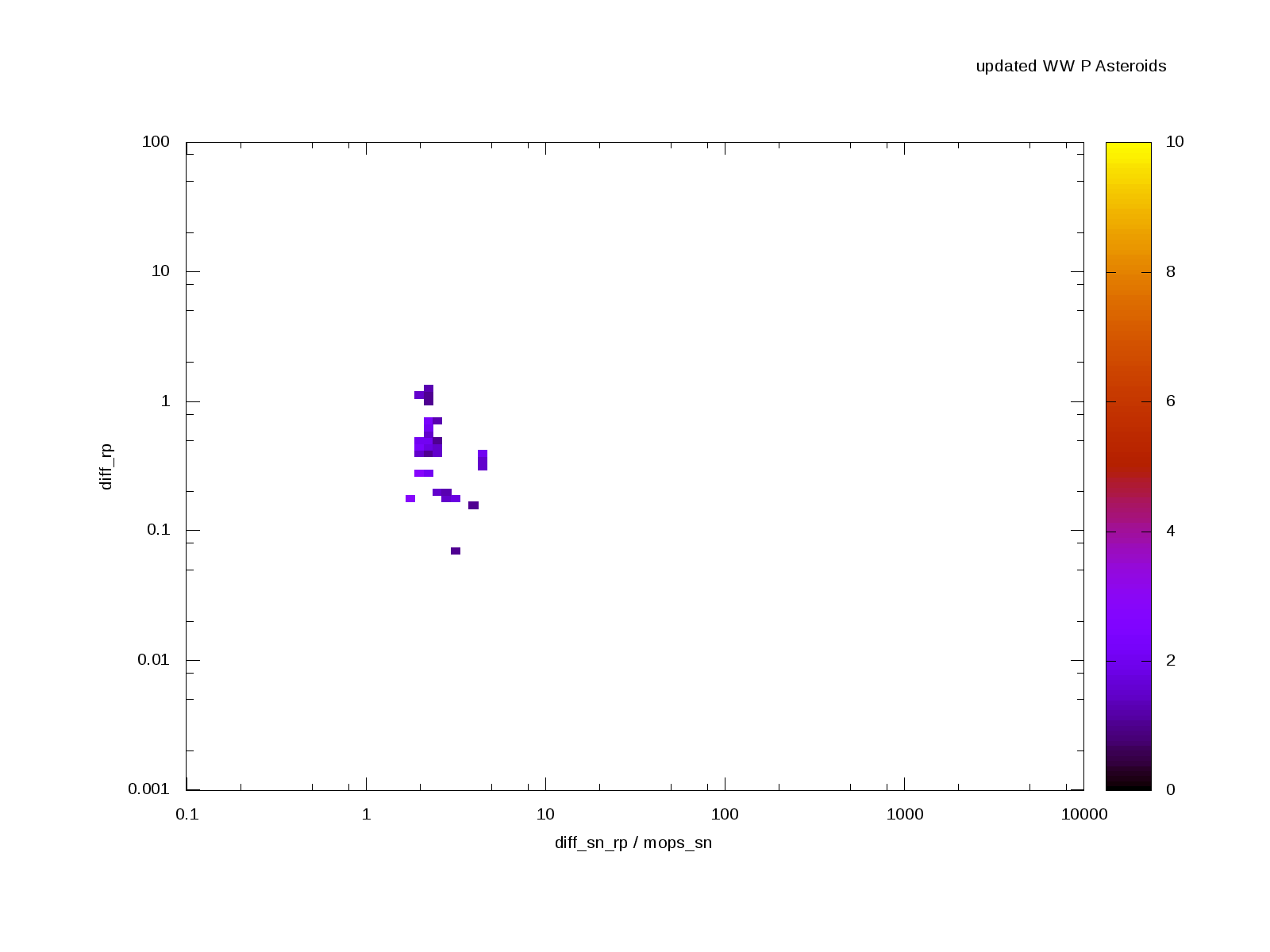
diff_sn/r p/m
| Positive | WW | WWI | WS |
| Original |  |  | 
|
| Updated |  |  | 
|
| Minus | WW | WWI | WS |
| Original |  |  | 
|
| Updated |  |  | 
|
Convolution issues (2012-11-02)
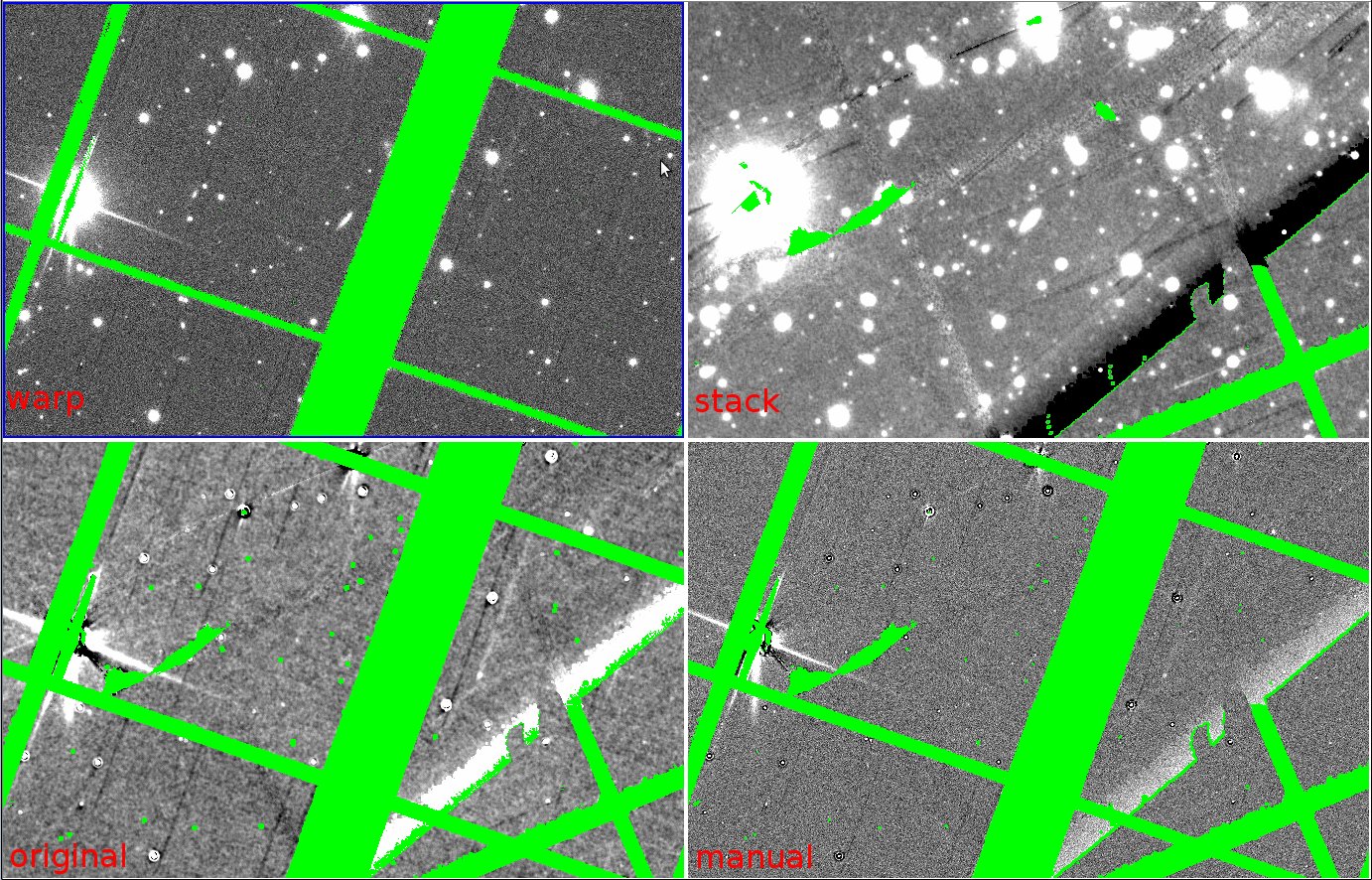
Examining the difference images for a WS diff led to the conclusion that the convolution direction was being chosen incorrectly. This appears to be due to the default difference recipe convolving the input file (the warp). The following image shows a comparison of the warp, stack, original difference, and a manual difference that convolves the stack instead.

The manual difference has fewer and smaller residual features, as would be expected from an improved convolution.
Signal to Noise changes
As the original difference was convolving the warp, the output diff variance was smaller than it should have been (as the convolution reduces the variance). With the convolution being done to the stack instead, the output variance is now dominated by the variance of the input warp (as would be expected). However, this results in the S/N of detections in the manual difference being reduced relative to the values in the original difference.

DIFF_R_P, DIFF_SN_P changes
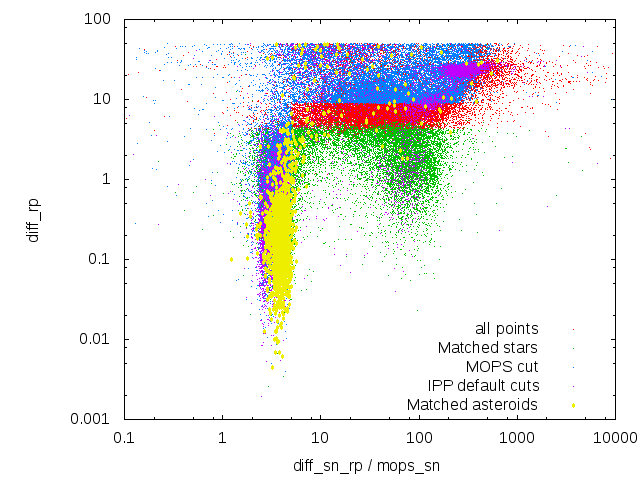
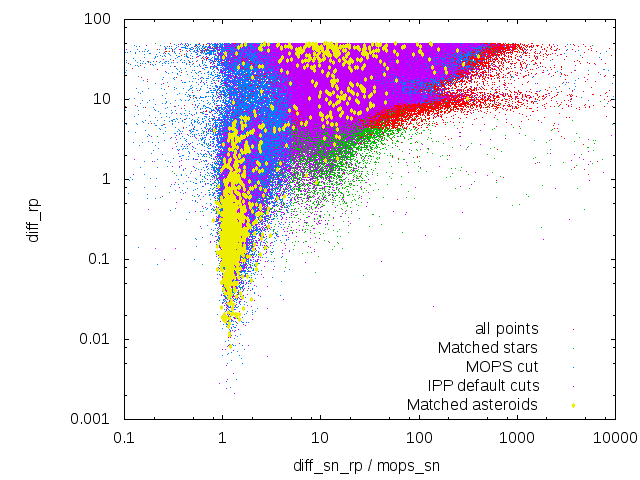
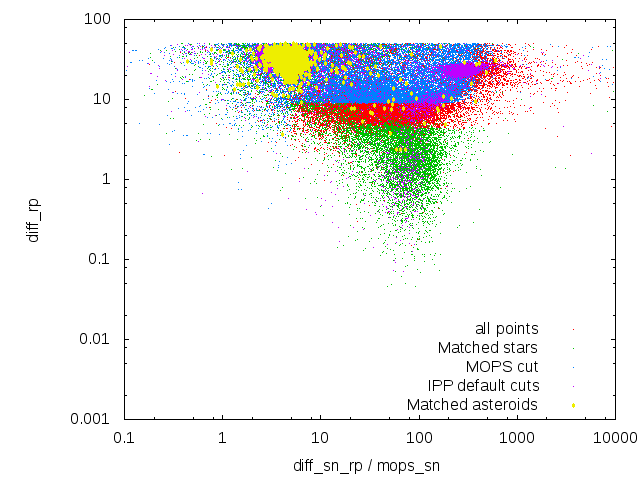
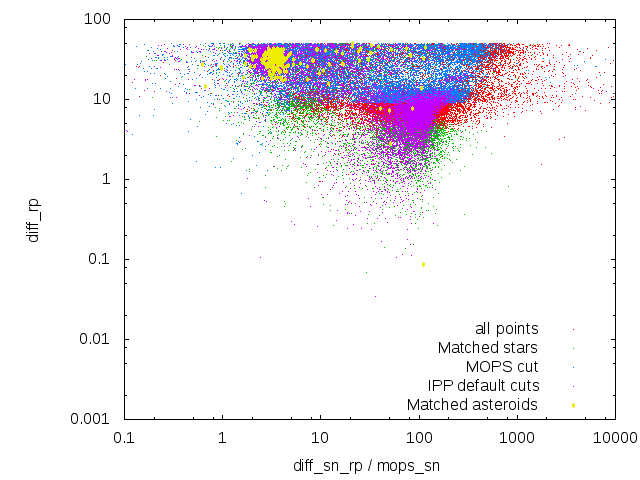
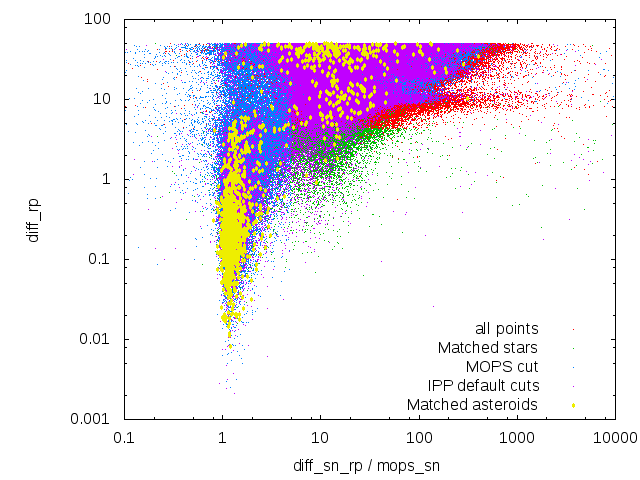
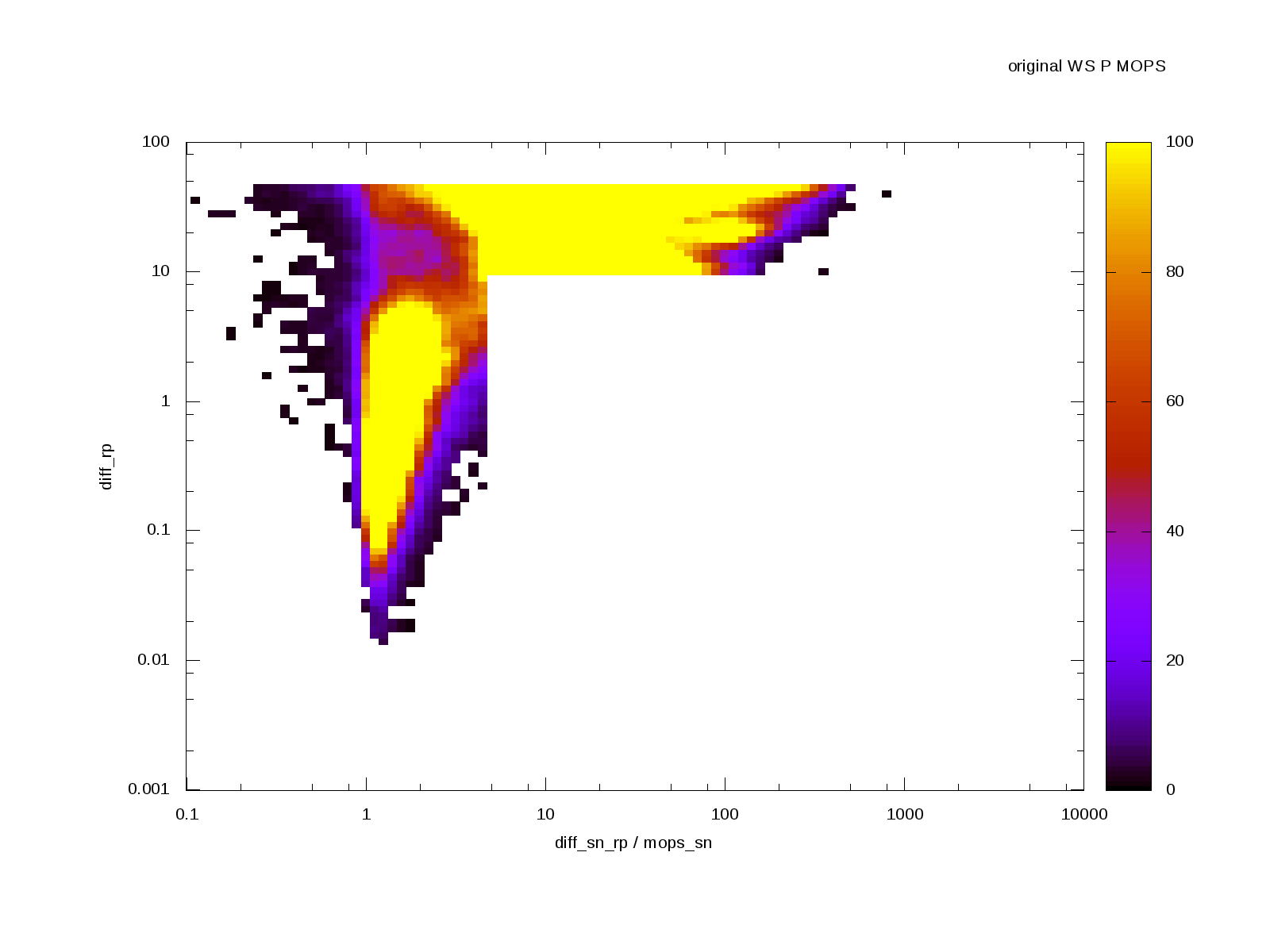
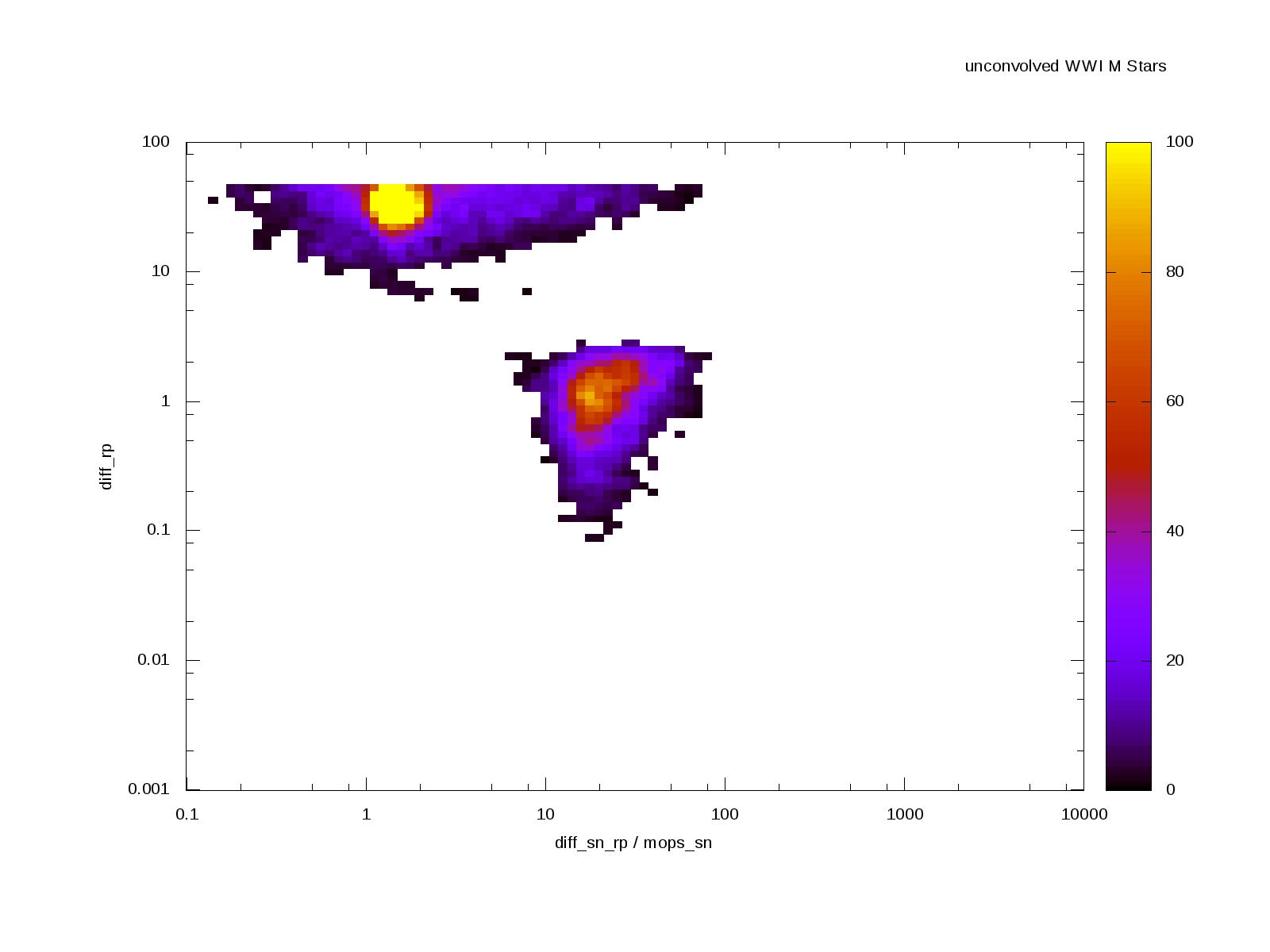
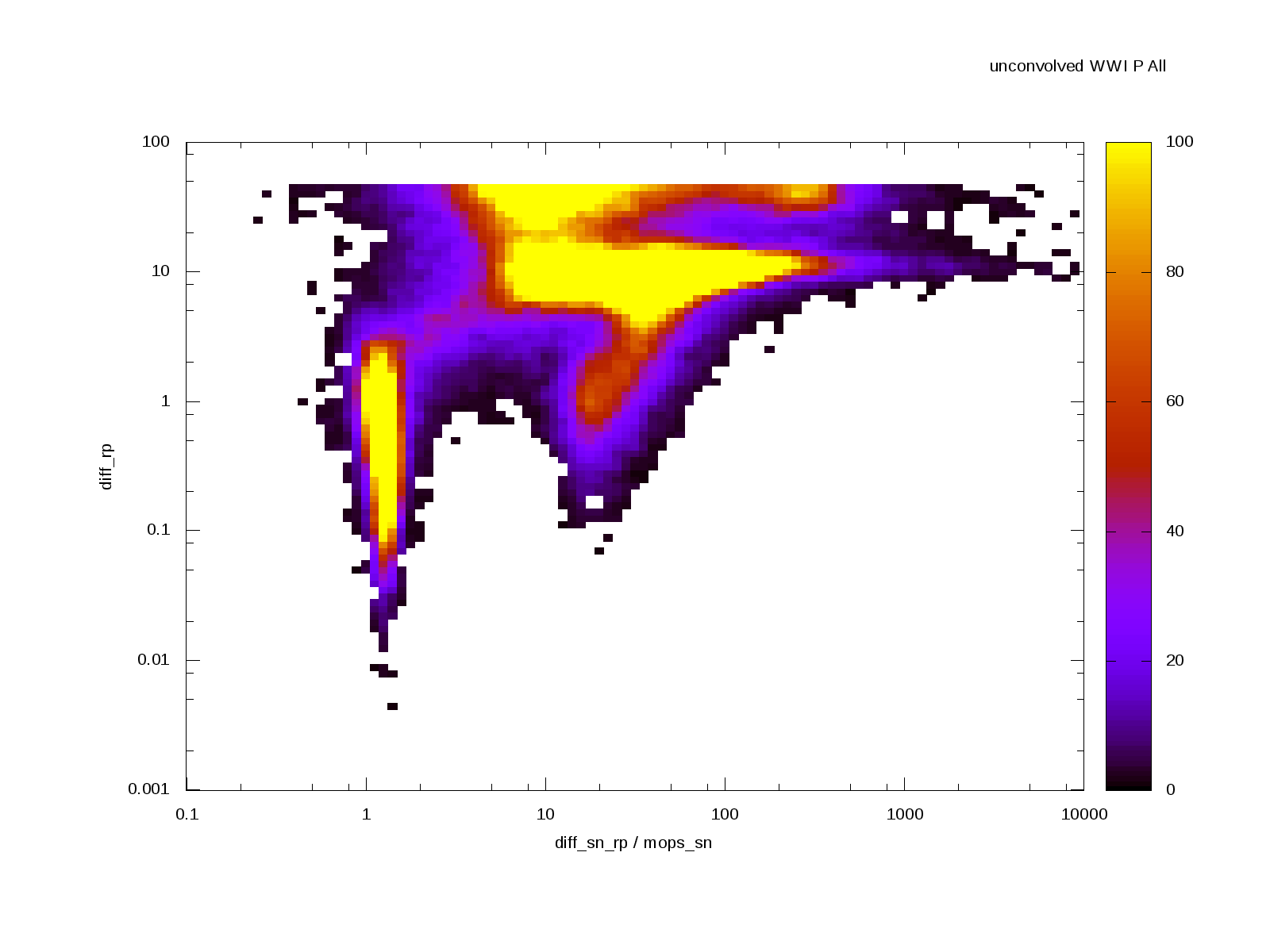
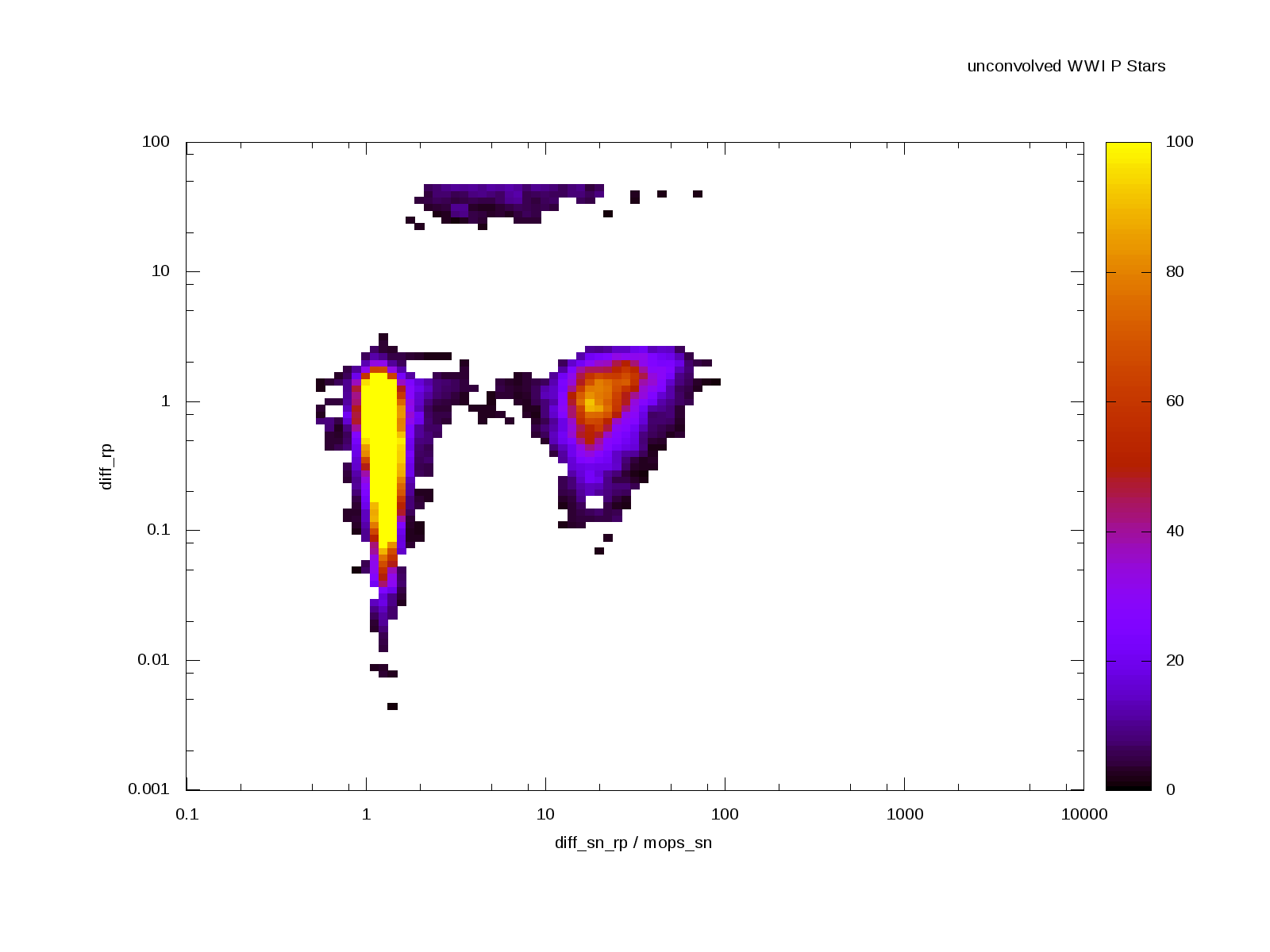
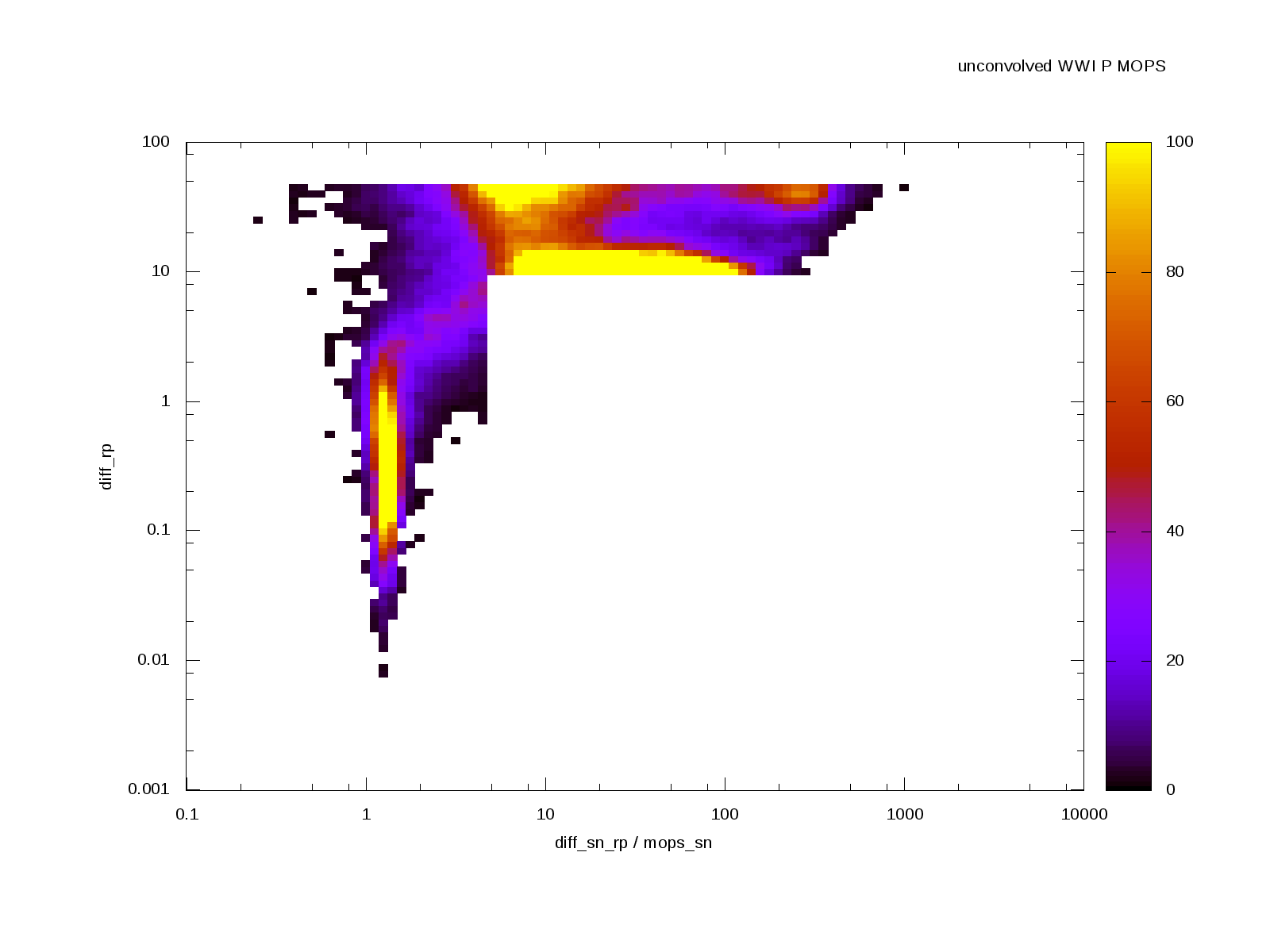
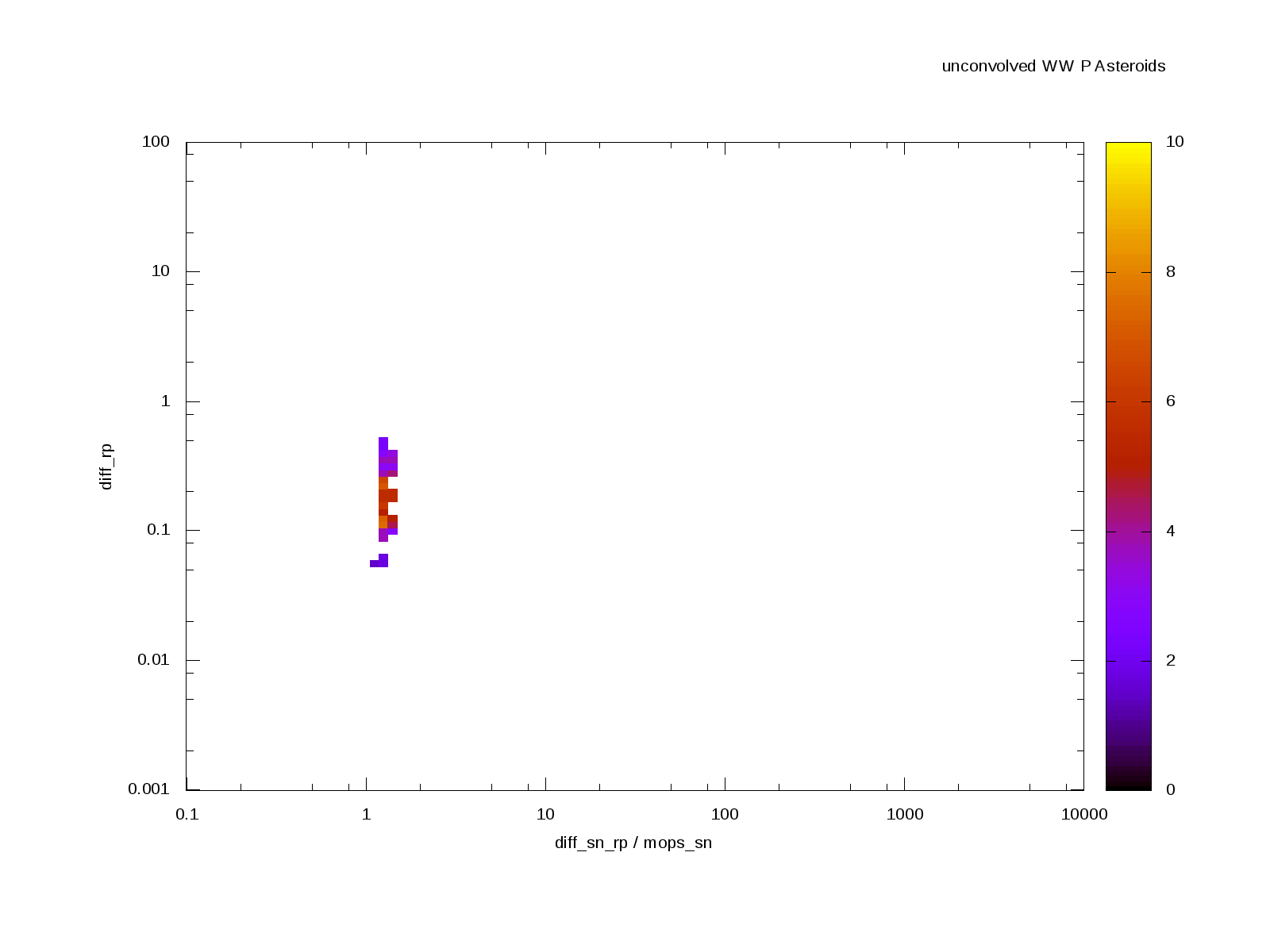
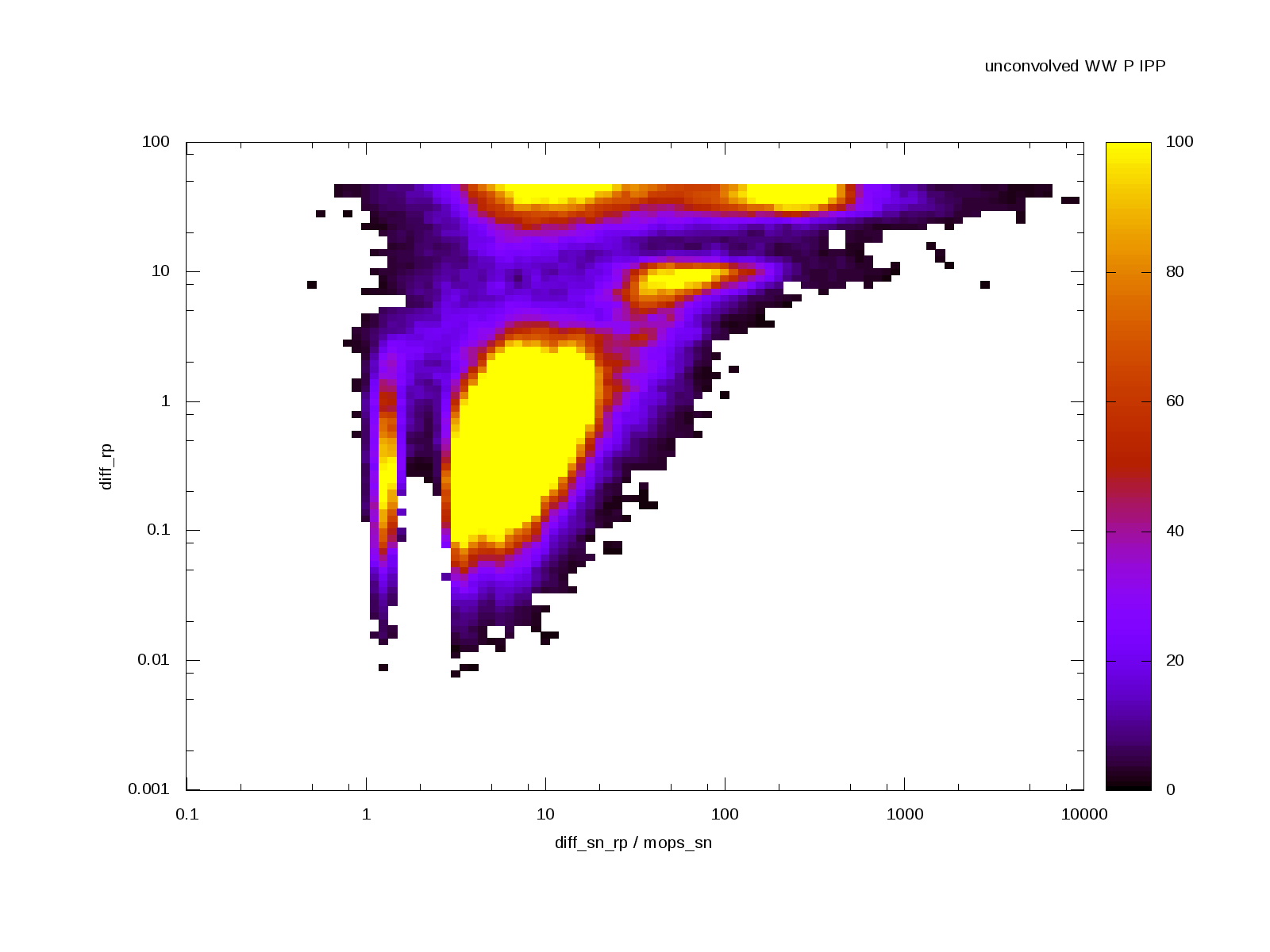
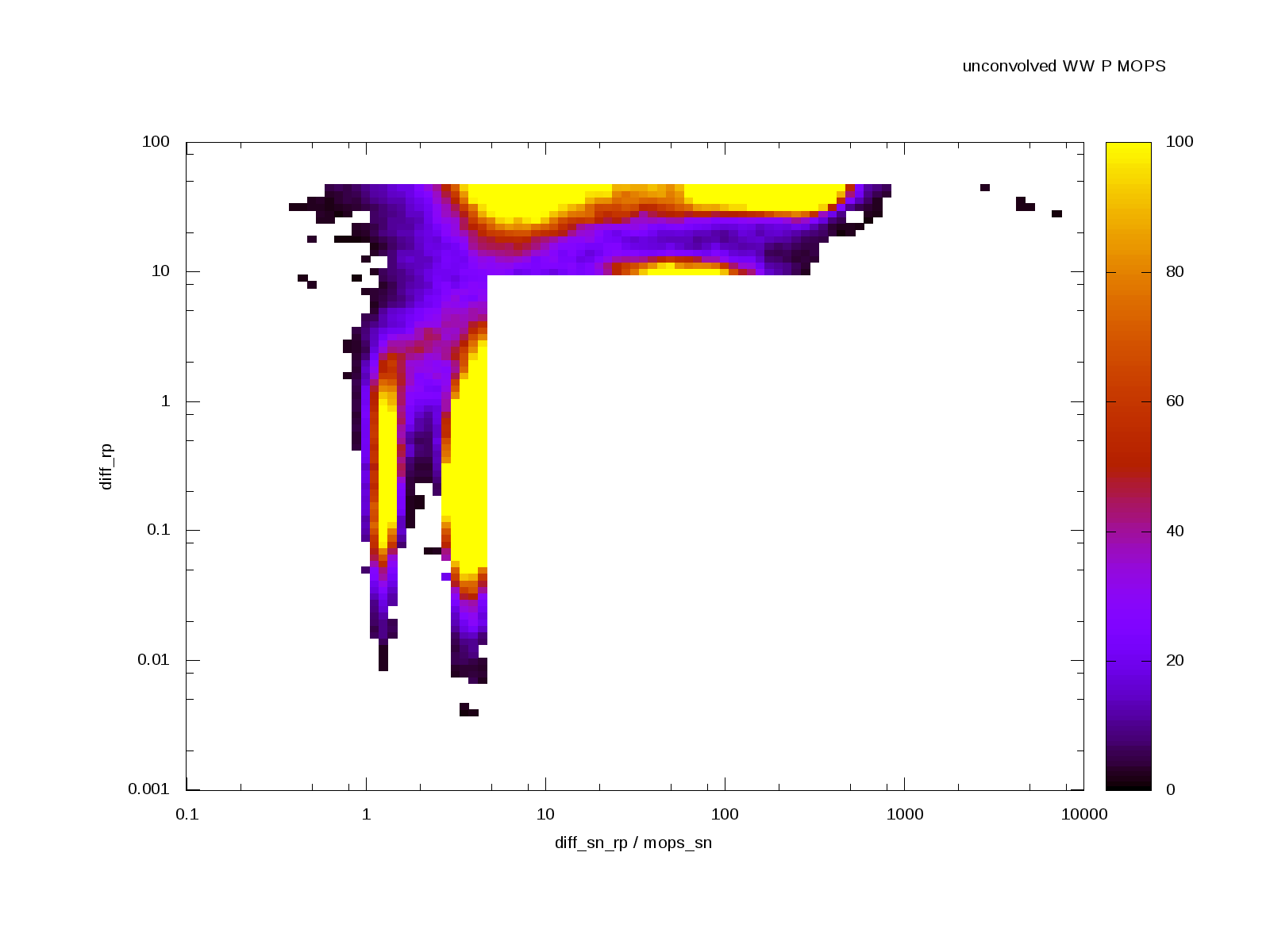
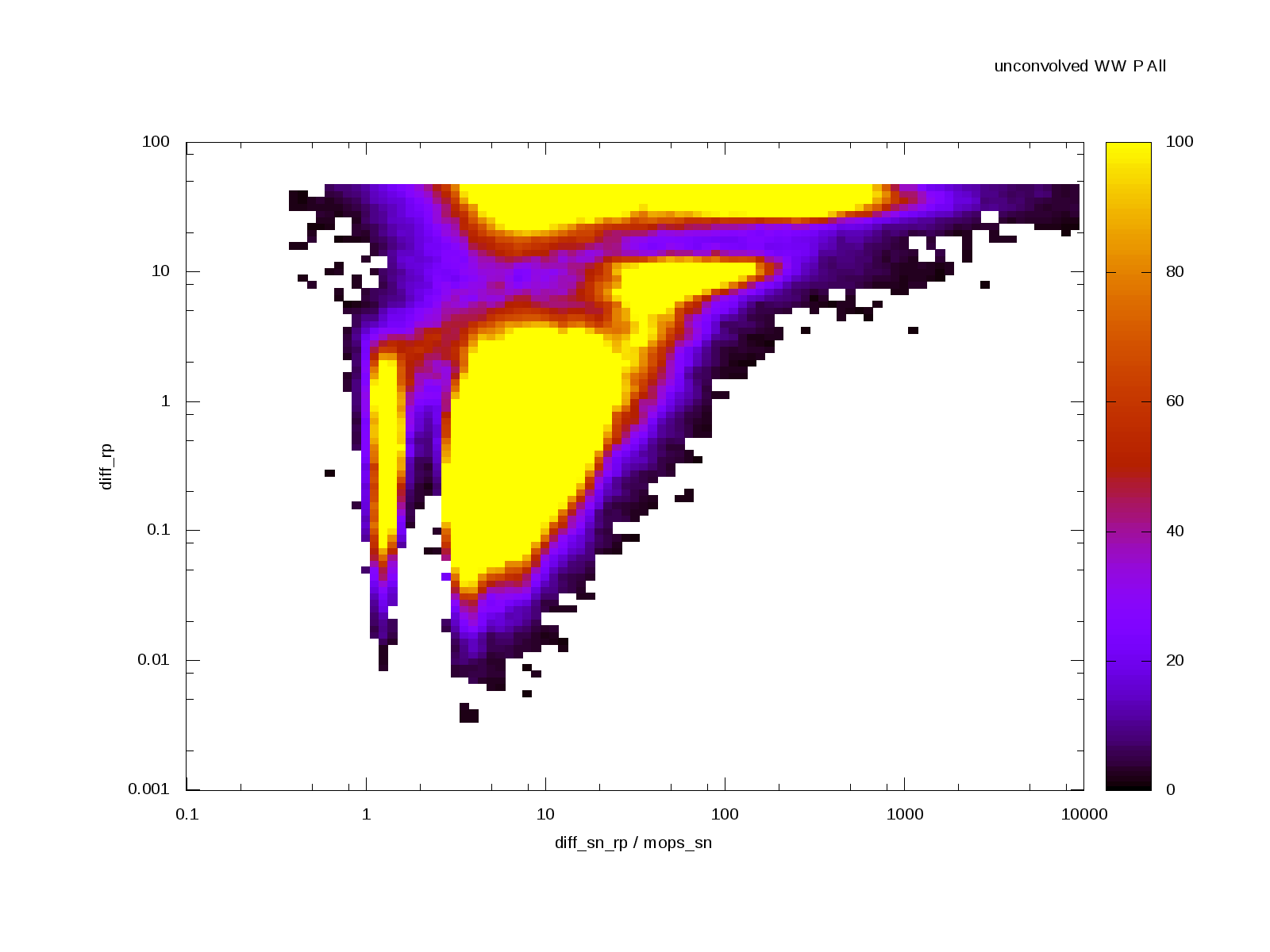
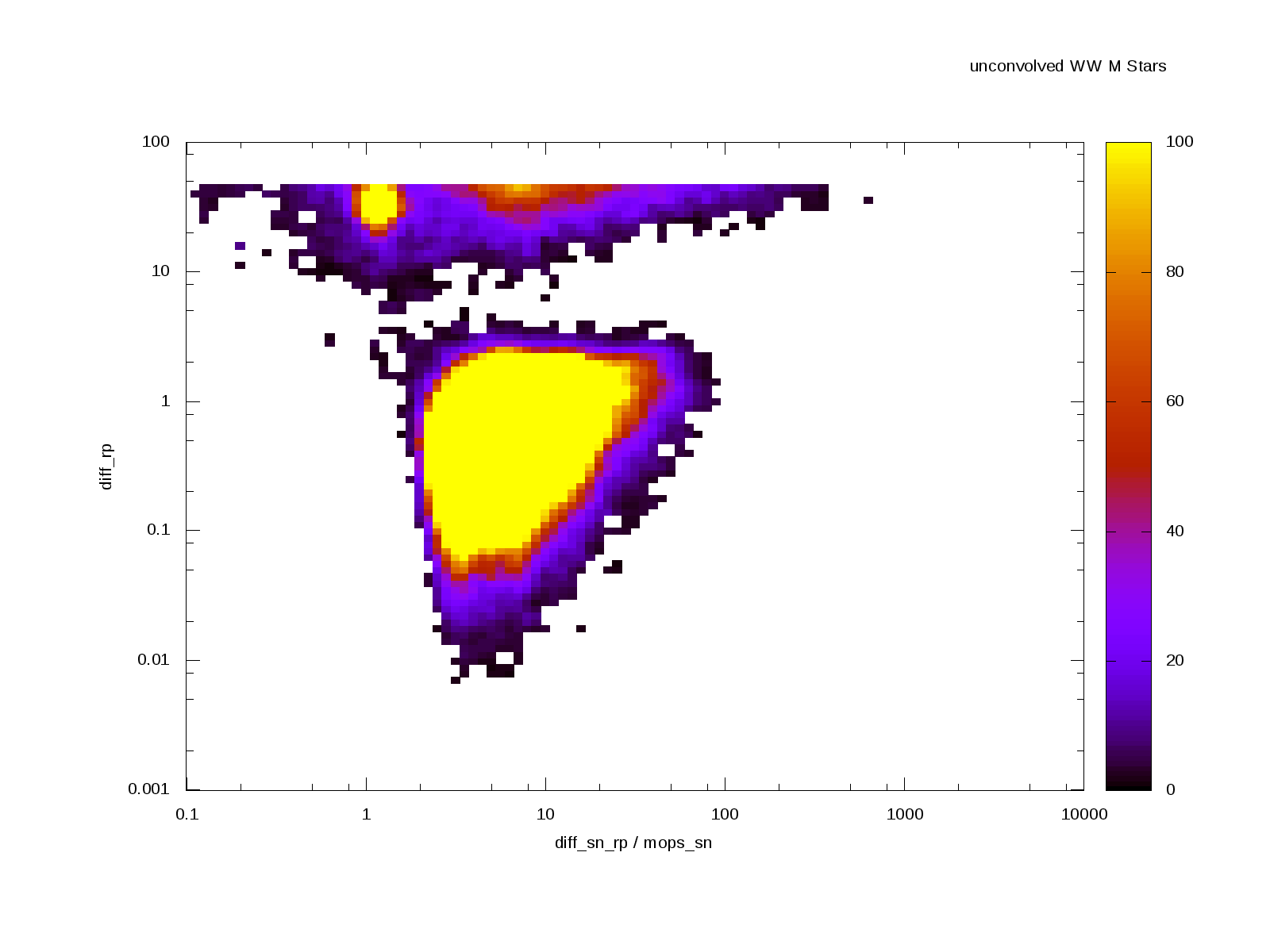
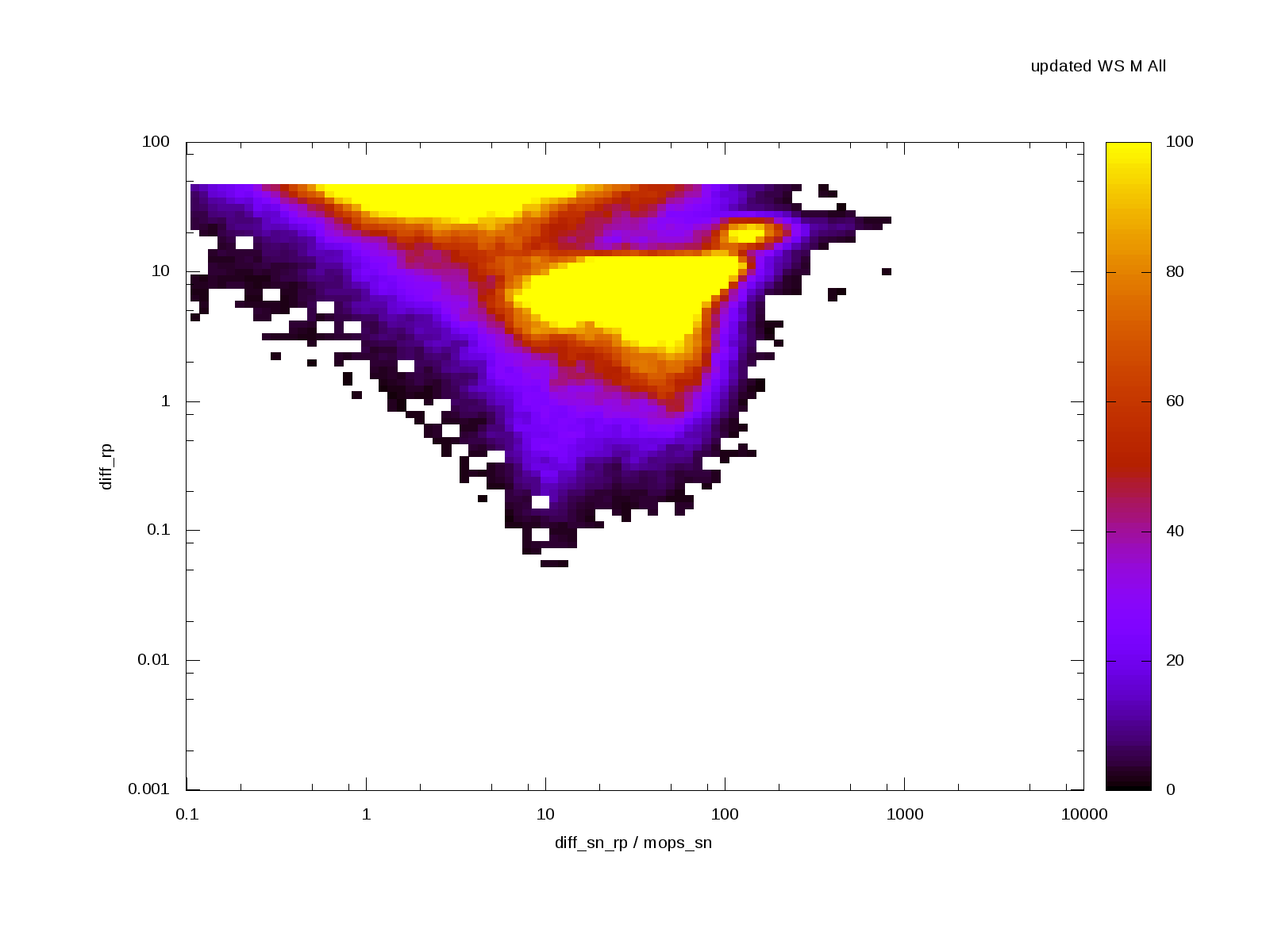
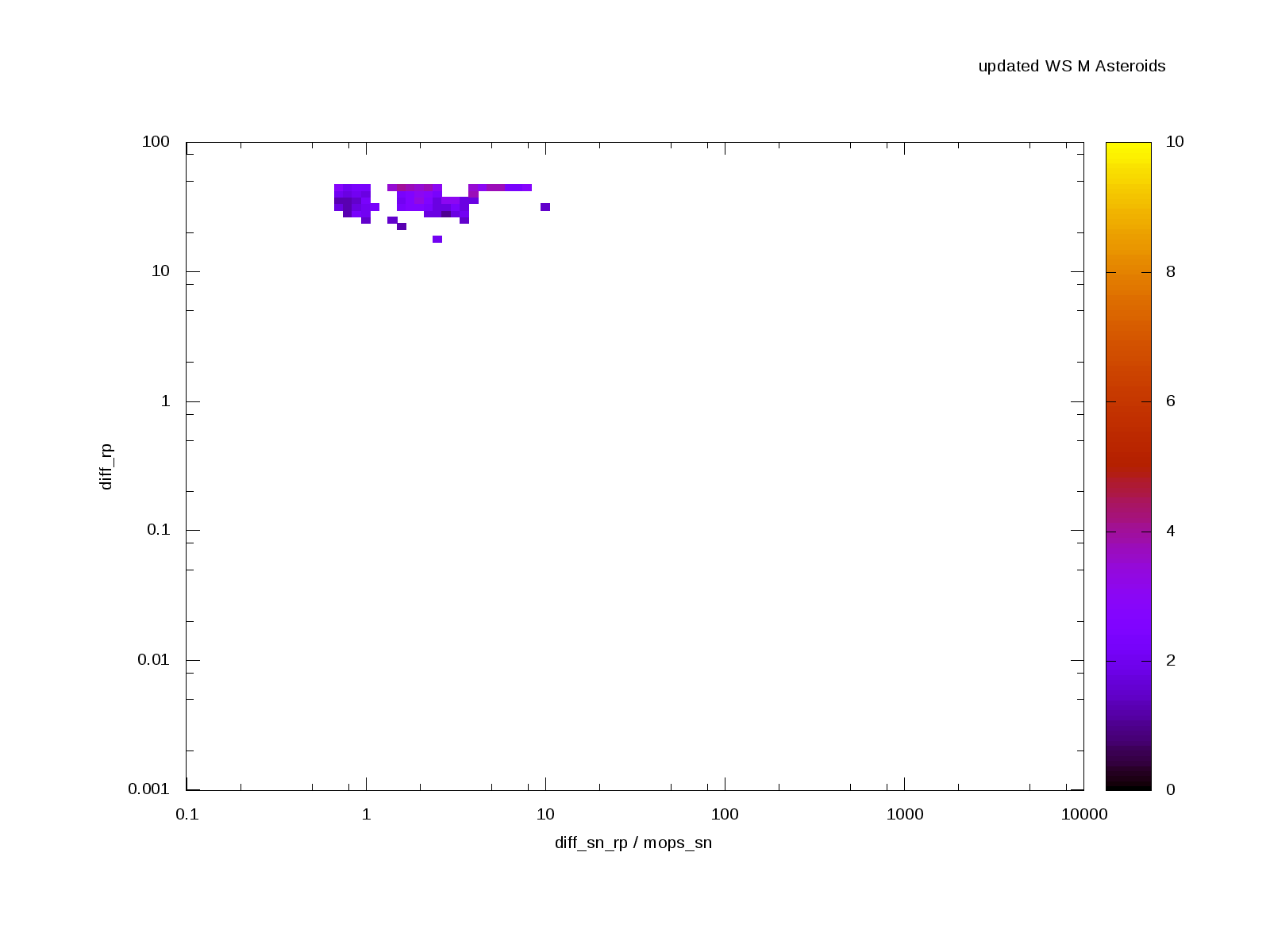
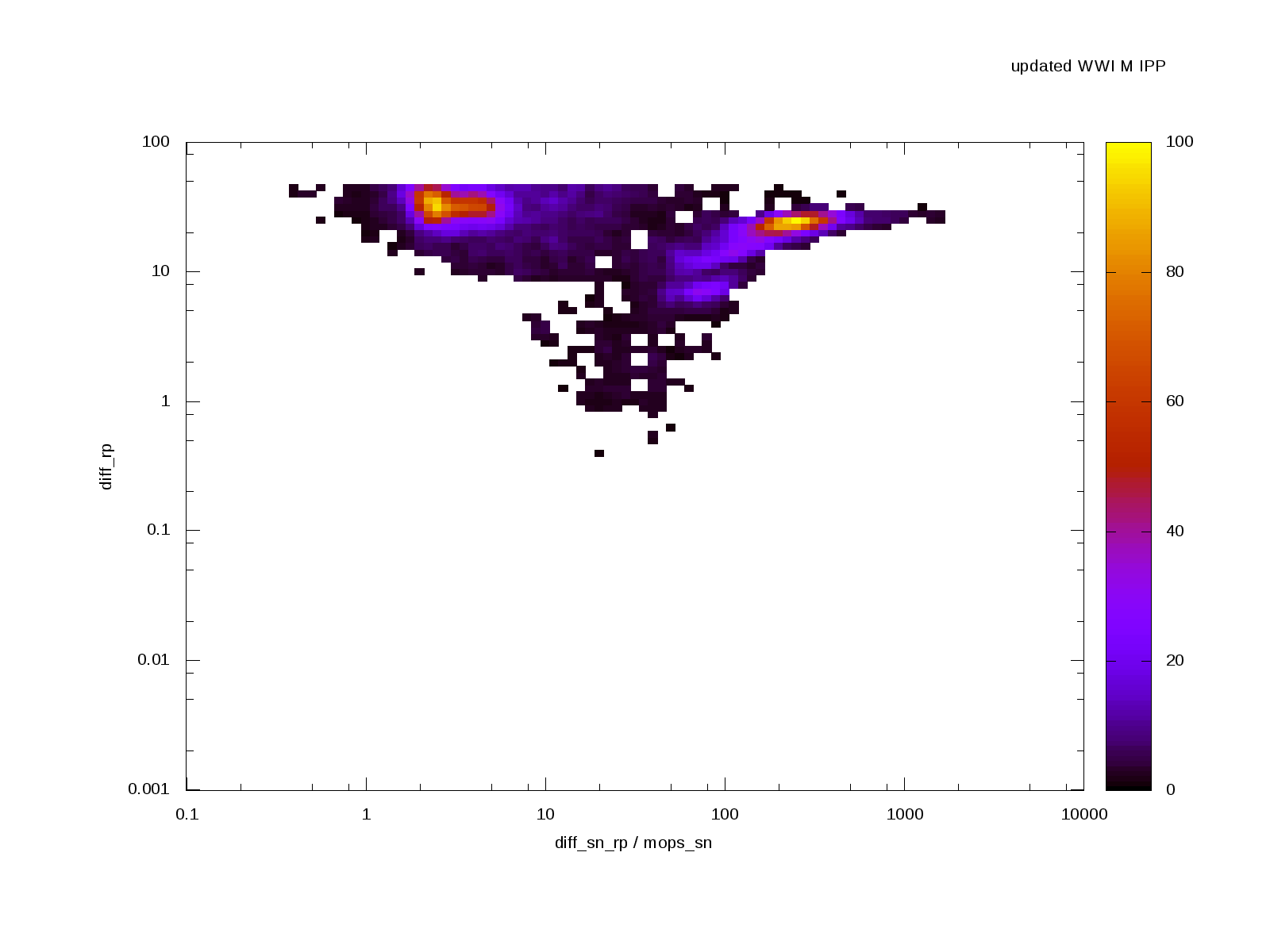
One way of mitigating the influence of poor subtraction in the difference images is to use the DIFF_R_P (radius to the nearest positive source) and DIFF_SN_P (signal to noise of this source). If a detection is very near a positive source, then it may in fact be simply a poor subtraction of a star. Plotting these values for the original and manual difference shows that the manual difference image has a very different distribution of points, with a significant reduction in the points that represent bright wings of stars being detected at increasing distance for increasingly bright sources. This again confirms the improved subtraction, and suggests that the false positive rate in the difference images can be reduced.

Attachments (121)
- comparison.jpg (460.3 KB ) - added by 14 years ago.
- diff_r_sn_p.png (14.5 KB ) - added by 14 years ago.
- mag_sn.png (7.8 KB ) - added by 14 years ago.
- updated_submode.png (5.0 KB ) - added by 14 years ago.
- WS_depth.png (6.6 KB ) - added by 14 years ago.
- WWI_depth.png (6.8 KB ) - added by 14 years ago.
- WW_depth.png (6.8 KB ) - added by 14 years ago.
- WWI_SN.png (14.5 KB ) - added by 14 years ago.
- WS_SN.png (28.0 KB ) - added by 14 years ago.
- WW_SN.png (10.3 KB ) - added by 14 years ago.
- original_WW_P.png (19.5 KB ) - added by 14 years ago.
- original_WWI_P.png (19.2 KB ) - added by 14 years ago.
- original_WS_P.2.png (19.3 KB ) - added by 14 years ago.
- original_WW_M.2.png (16.7 KB ) - added by 14 years ago.
- original_WWI_M.png (17.4 KB ) - added by 14 years ago.
- original_WS_M.png (19.8 KB ) - added by 14 years ago.
- original_WW_M.png (16.7 KB ) - added by 14 years ago.
- original_WS_P.png (19.3 KB ) - added by 14 years ago.
- updated_WW_P.png (20.9 KB ) - added by 14 years ago.
- updated_WWI_P.png (19.9 KB ) - added by 14 years ago.
- updated_WS_P.png (21.4 KB ) - added by 14 years ago.
- updated_WW_M.png (18.0 KB ) - added by 14 years ago.
- updated_WWI_M.png (17.2 KB ) - added by 14 years ago.
- updated_WS_M.png (22.3 KB ) - added by 14 years ago.
- O_WS_M_all.png (15.6 KB ) - added by 14 years ago.
- O_WS_M_asteroids.png (11.3 KB ) - added by 14 years ago.
- O_WS_M_IPP.png (14.8 KB ) - added by 14 years ago.
- O_WS_M_MOPS.png (13.9 KB ) - added by 14 years ago.
- O_WS_M_stars.png (15.9 KB ) - added by 14 years ago.
- O_WS_P_all.png (16.5 KB ) - added by 14 years ago.
- O_WS_P_asteroids.png (12.4 KB ) - added by 14 years ago.
- O_WS_P_IPP.png (16.0 KB ) - added by 14 years ago.
- O_WS_P_MOPS.png (15.1 KB ) - added by 14 years ago.
- O_WS_P_stars.png (15.8 KB ) - added by 14 years ago.
- O_WWI_M_all.png (16.3 KB ) - added by 14 years ago.
- O_WWI_M_asteroids.png (11.0 KB ) - added by 14 years ago.
- O_WWI_M_IPP.png (13.4 KB ) - added by 14 years ago.
- O_WWI_M_stars.png (15.2 KB ) - added by 14 years ago.
- O_WWI_M_MOPS.png (13.3 KB ) - added by 14 years ago.
- O_WWI_P_all.png (18.1 KB ) - added by 14 years ago.
- O_WWI_P_asteroids.png (11.9 KB ) - added by 14 years ago.
- O_WWI_P_IPP.png (15.0 KB ) - added by 14 years ago.
- O_WWI_P_MOPS.png (15.1 KB ) - added by 14 years ago.
- O_WWI_P_stars.png (15.8 KB ) - added by 14 years ago.
- O_WW_M_all.png (15.7 KB ) - added by 14 years ago.
- O_WW_M_asteroids.png (10.9 KB ) - added by 14 years ago.
- O_WW_M_IPP.png (13.7 KB ) - added by 14 years ago.
- O_WW_M_MOPS.png (13.2 KB ) - added by 14 years ago.
- O_WW_M_stars.png (14.7 KB ) - added by 14 years ago.
- O_WW_P_all.png (17.8 KB ) - added by 14 years ago.
- O_WW_P_asteroids.png (11.4 KB ) - added by 14 years ago.
- O_WW_P_IPP.png (15.4 KB ) - added by 14 years ago.
- O_WW_P_MOPS.png (15.1 KB ) - added by 14 years ago.
- O_WW_P_stars.png (15.4 KB ) - added by 14 years ago.
- UNC_WS_M_all.png (13.1 KB ) - added by 14 years ago.
- UNC_WS_M_asteroids.png (11.1 KB ) - added by 14 years ago.
- UNC_WS_M_IPP.png (12.9 KB ) - added by 14 years ago.
- UNC_WS_M_MOPS.png (12.5 KB ) - added by 14 years ago.
- UNC_WS_M_stars.png (12.8 KB ) - added by 14 years ago.
- UNC_WS_P_all.png (16.8 KB ) - added by 14 years ago.
- UNC_WS_P_asteroids.png (12.0 KB ) - added by 14 years ago.
- UNC_WS_P_IPP.png (15.7 KB ) - added by 14 years ago.
- UNC_WS_P_MOPS.png (14.9 KB ) - added by 14 years ago.
- UNC_WS_P_stars.png (13.9 KB ) - added by 14 years ago.
- UNC_WWI_M_all.png (16.7 KB ) - added by 14 years ago.
- UNC_WWI_M_asteroids.png (11.1 KB ) - added by 14 years ago.
- UNC_WWI_M_IPP.png (15.2 KB ) - added by 14 years ago.
- UNC_WWI_M_MOPS.png (13.9 KB ) - added by 14 years ago.
- UNC_WWI_M_stars.png (14.1 KB ) - added by 14 years ago.
- UNC_WWI_P_asteroids.png (11.6 KB ) - added by 14 years ago.
- UNC_WWI_P_all.png (18.3 KB ) - added by 14 years ago.
- UNC_WWI_P_IPP.png (16.5 KB ) - added by 14 years ago.
- UNC_WWI_P_stars.png (14.8 KB ) - added by 14 years ago.
- UNC_WWI_P_MOPS.png (15.7 KB ) - added by 14 years ago.
- UNC_WW_M_all.png (18.2 KB ) - added by 14 years ago.
- UNC_WW_M_asteroids.png (11.1 KB ) - added by 14 years ago.
- UNC_WW_M_IPP.png (17.6 KB ) - added by 14 years ago.
- UNC_WW_M_MOPS.png (15.6 KB ) - added by 14 years ago.
- UNC_WW_P_stars.png (16.2 KB ) - added by 14 years ago.
- UNC_WW_P_asteroids.png (11.2 KB ) - added by 14 years ago.
- UNC_WW_P_IPP.png (18.4 KB ) - added by 14 years ago.
- UNC_WW_P_MOPS.png (16.1 KB ) - added by 14 years ago.
- UNC_WW_P_all.png (19.1 KB ) - added by 14 years ago.
- UNC_WW_M_stars.png (16.7 KB ) - added by 14 years ago.
- U_WS_M_all.png (17.6 KB ) - added by 14 years ago.
- U_WS_M_asteroids.png (11.1 KB ) - added by 14 years ago.
- U_WS_M_IPP.png (15.8 KB ) - added by 14 years ago.
- U_WS_M_MOPS.png (13.8 KB ) - added by 14 years ago.
- U_WS_P_all.png (18.0 KB ) - added by 14 years ago.
- U_WS_M_stars.png (17.1 KB ) - added by 14 years ago.
- U_WS_P_asteroids.png (11.9 KB ) - added by 14 years ago.
- U_WWI_M_IPP.png (13.9 KB ) - added by 14 years ago.
- U_WWI_M_IPP.2.png (13.9 KB ) - added by 14 years ago.
- U_WWI_M_MOPS.png (13.6 KB ) - added by 14 years ago.
- U_WWI_M_stars.png (14.9 KB ) - added by 14 years ago.
- U_WS_P_MOPS.png (14.8 KB ) - added by 14 years ago.
- U_WS_P_IPP.png (16.2 KB ) - added by 14 years ago.
- U_WS_P_stars.png (16.3 KB ) - added by 14 years ago.
- U_WWI_M_asteroids.png (11.1 KB ) - added by 14 years ago.
- U_WWI_M_all.png (16.1 KB ) - added by 14 years ago.
- U_WWI_P_all.png (18.1 KB ) - added by 14 years ago.
- U_WWI_P_asteroids.png (12.0 KB ) - added by 14 years ago.
- U_WWI_P_IPP.png (15.4 KB ) - added by 14 years ago.
- U_WWI_P_stars.png (15.6 KB ) - added by 14 years ago.
- U_WWI_P_MOPS.png (15.7 KB ) - added by 14 years ago.
- U_WW_M_all.png (16.4 KB ) - added by 14 years ago.
- U_WW_M_asteroids.png (11.0 KB ) - added by 14 years ago.
- U_WW_M_IPP.png (14.2 KB ) - added by 14 years ago.
- U_WW_M_MOPS.png (13.4 KB ) - added by 14 years ago.
- U_WW_M_stars.png (15.0 KB ) - added by 14 years ago.
- U_WW_P_all.png (18.3 KB ) - added by 14 years ago.
- U_WW_P_asteroids.png (11.1 KB ) - added by 14 years ago.
- U_WW_P_IPP.png (16.1 KB ) - added by 14 years ago.
- U_WW_P_MOPS.png (15.6 KB ) - added by 14 years ago.
- U_WW_P_stars.png (15.7 KB ) - added by 14 years ago.
- WS_SN.2.png (54.0 KB ) - added by 14 years ago.
- WW_SN.2.png (28.2 KB ) - added by 14 years ago.
- WWI_SN.2.png (52.4 KB ) - added by 14 years ago.
- WS_depth.2.png (21.8 KB ) - added by 14 years ago.
- WWI_depth.2.png (21.7 KB ) - added by 14 years ago.
- WW_depth.2.png (21.6 KB ) - added by 14 years ago.