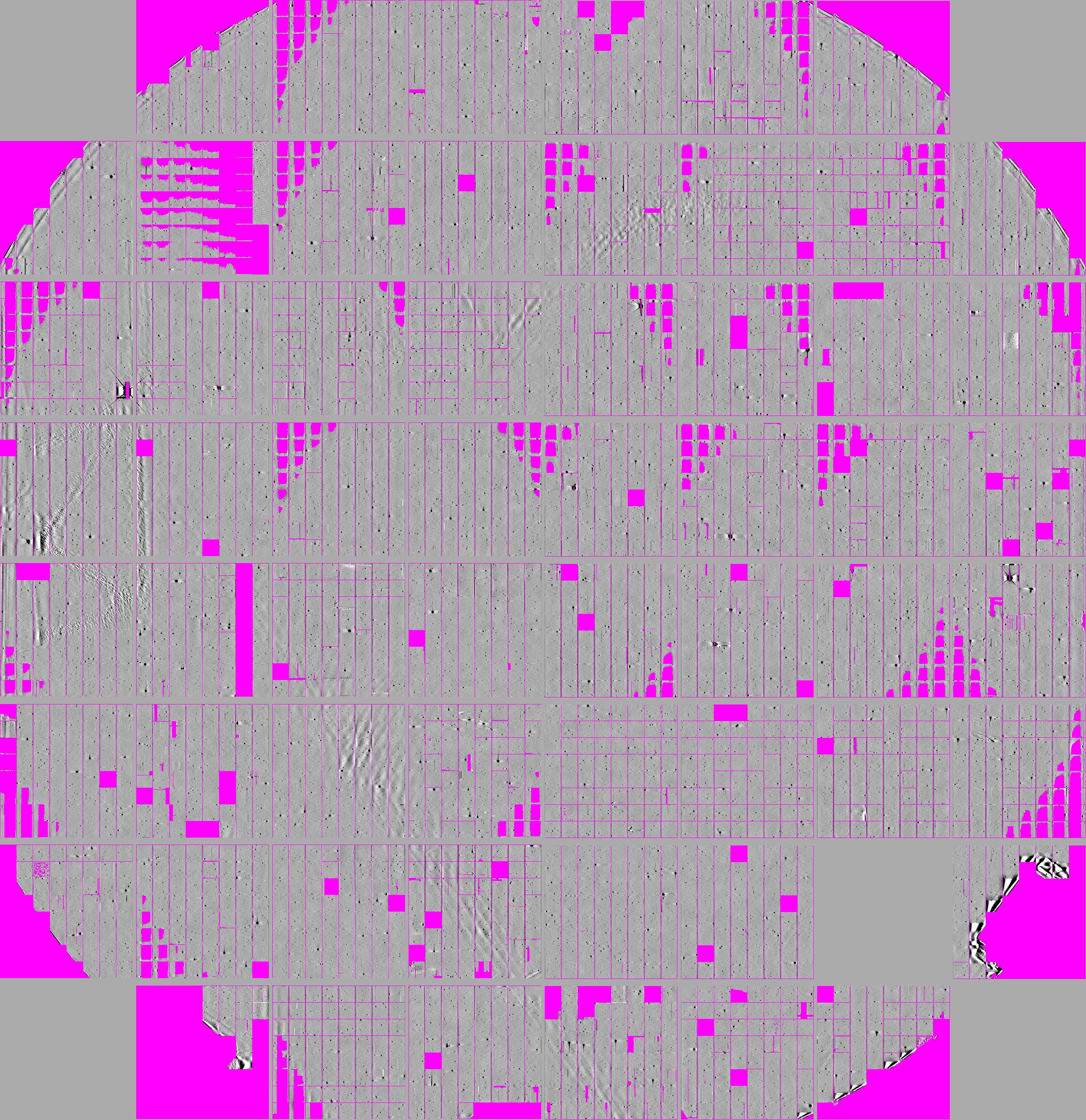
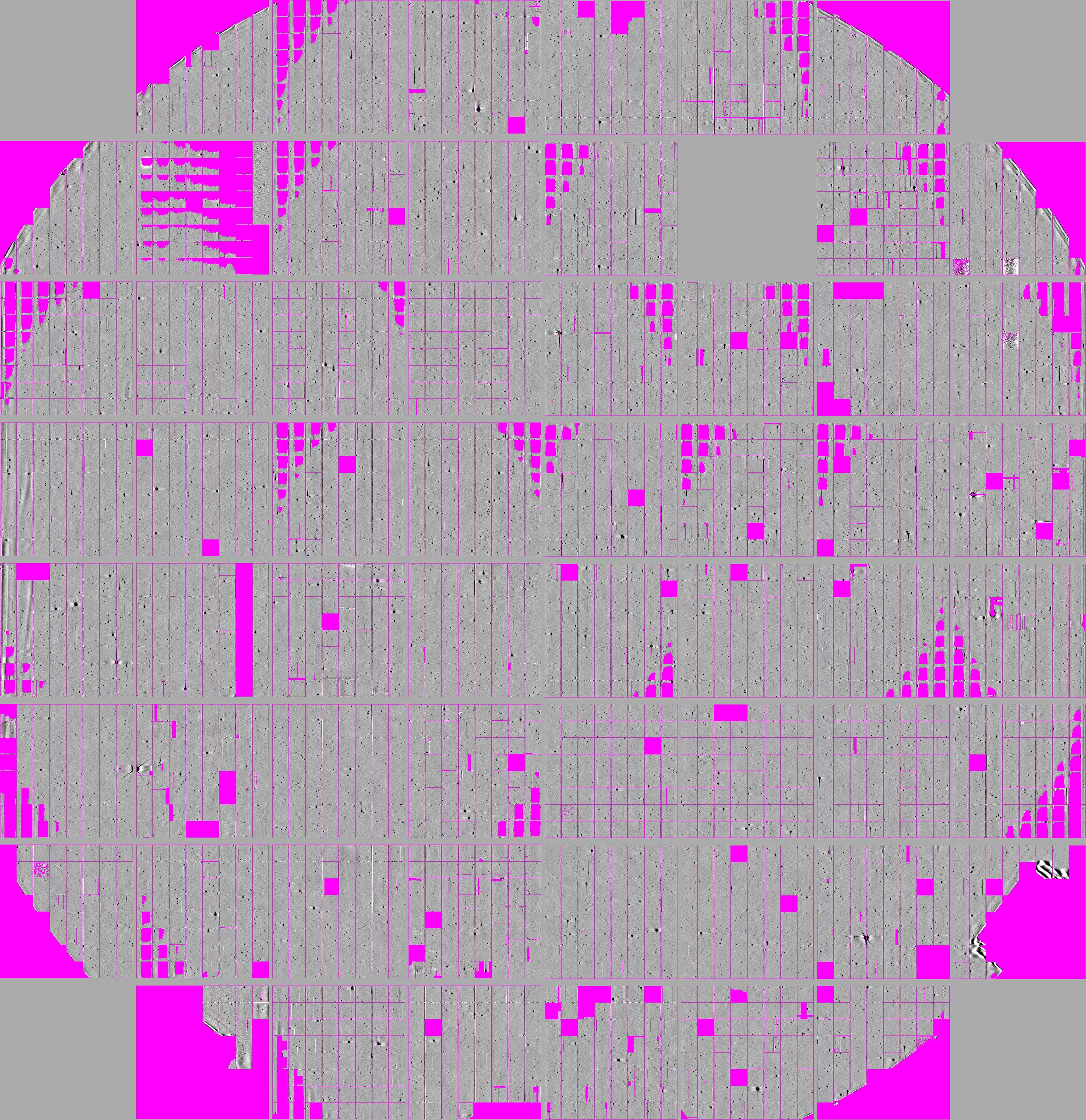
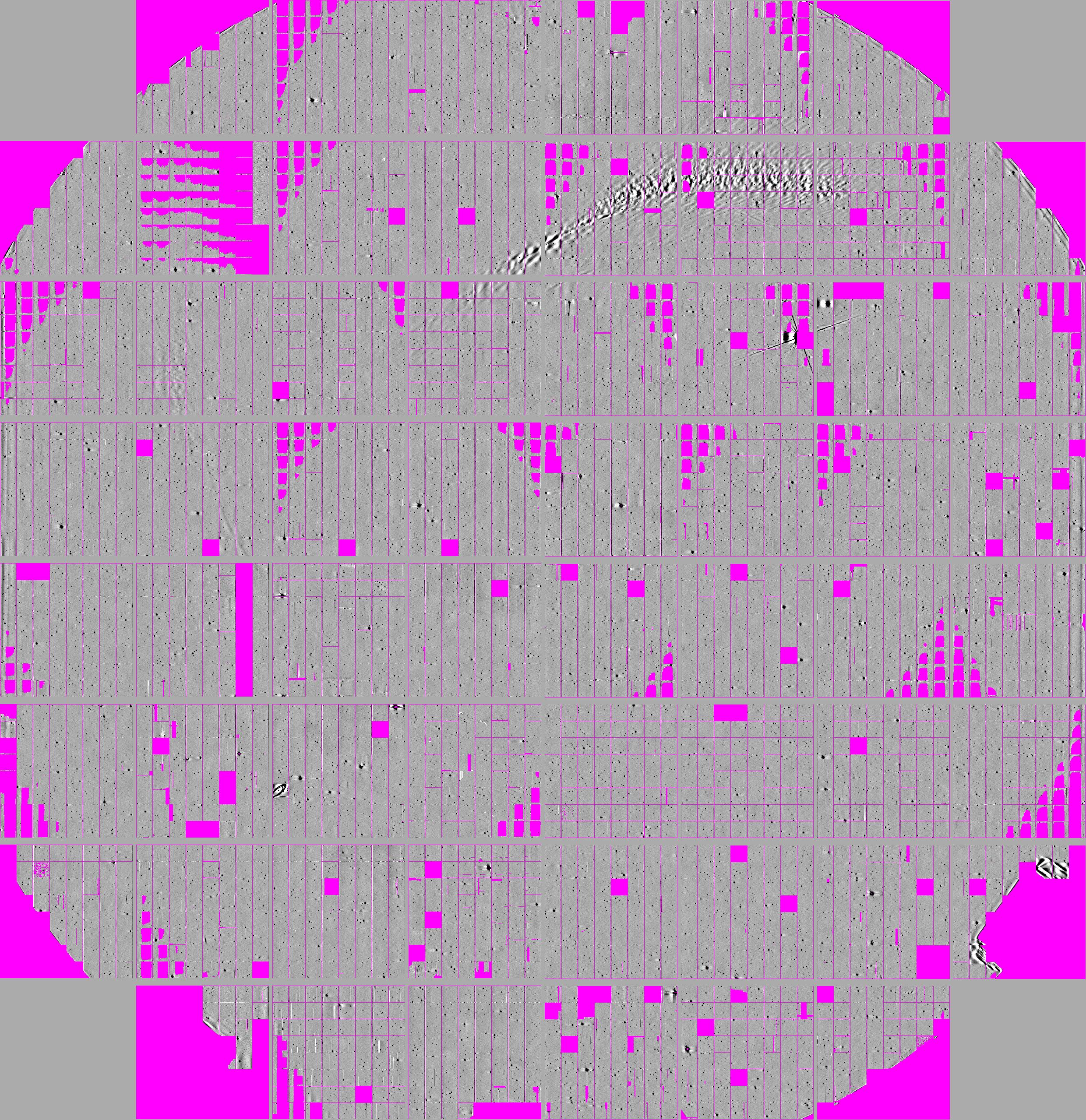
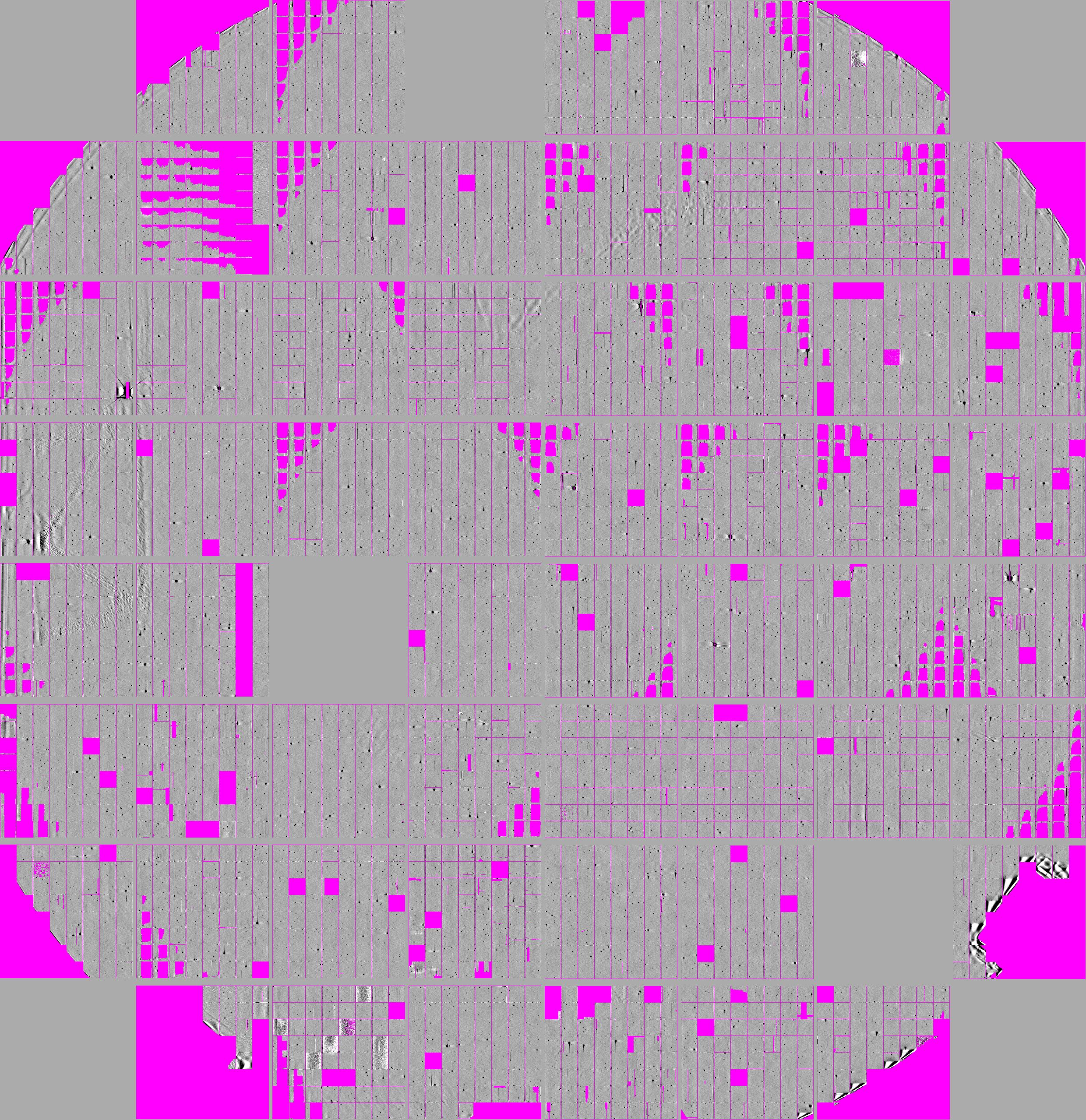
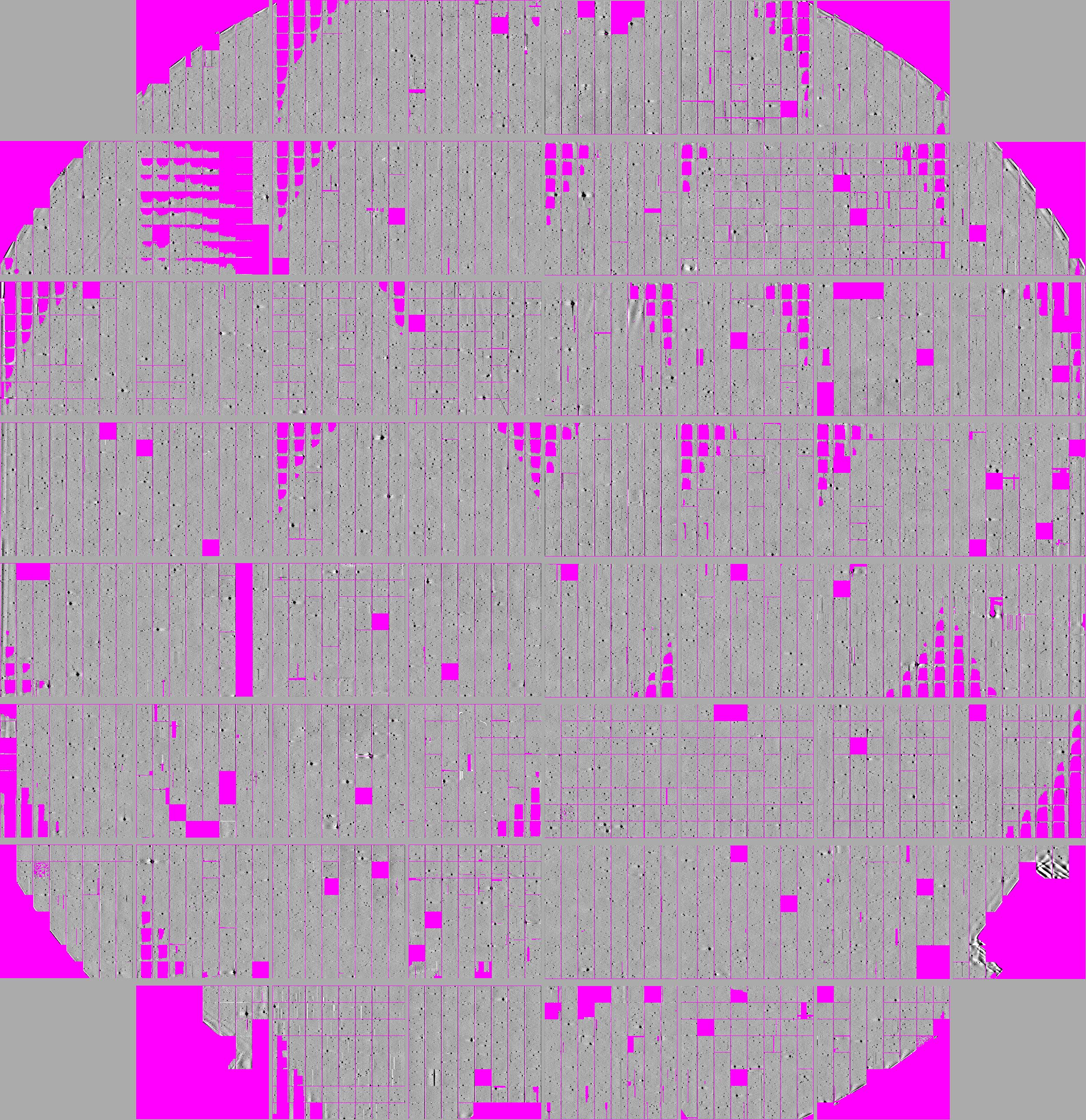
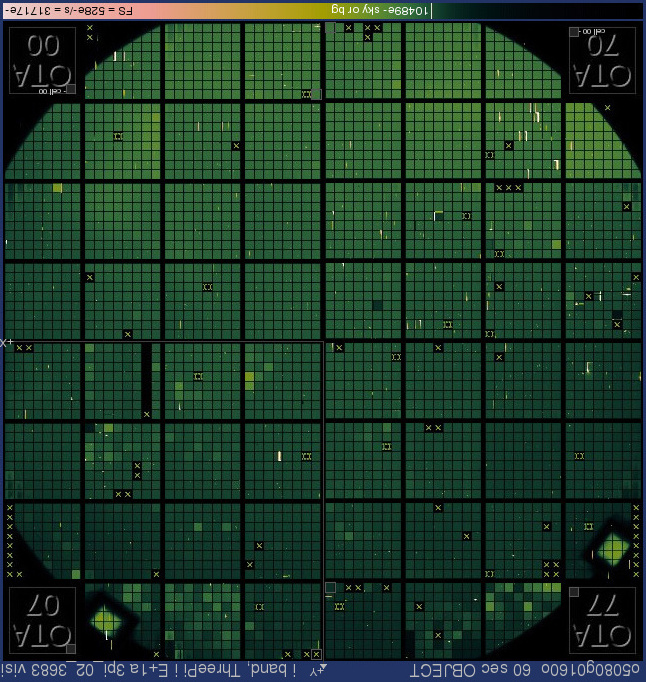
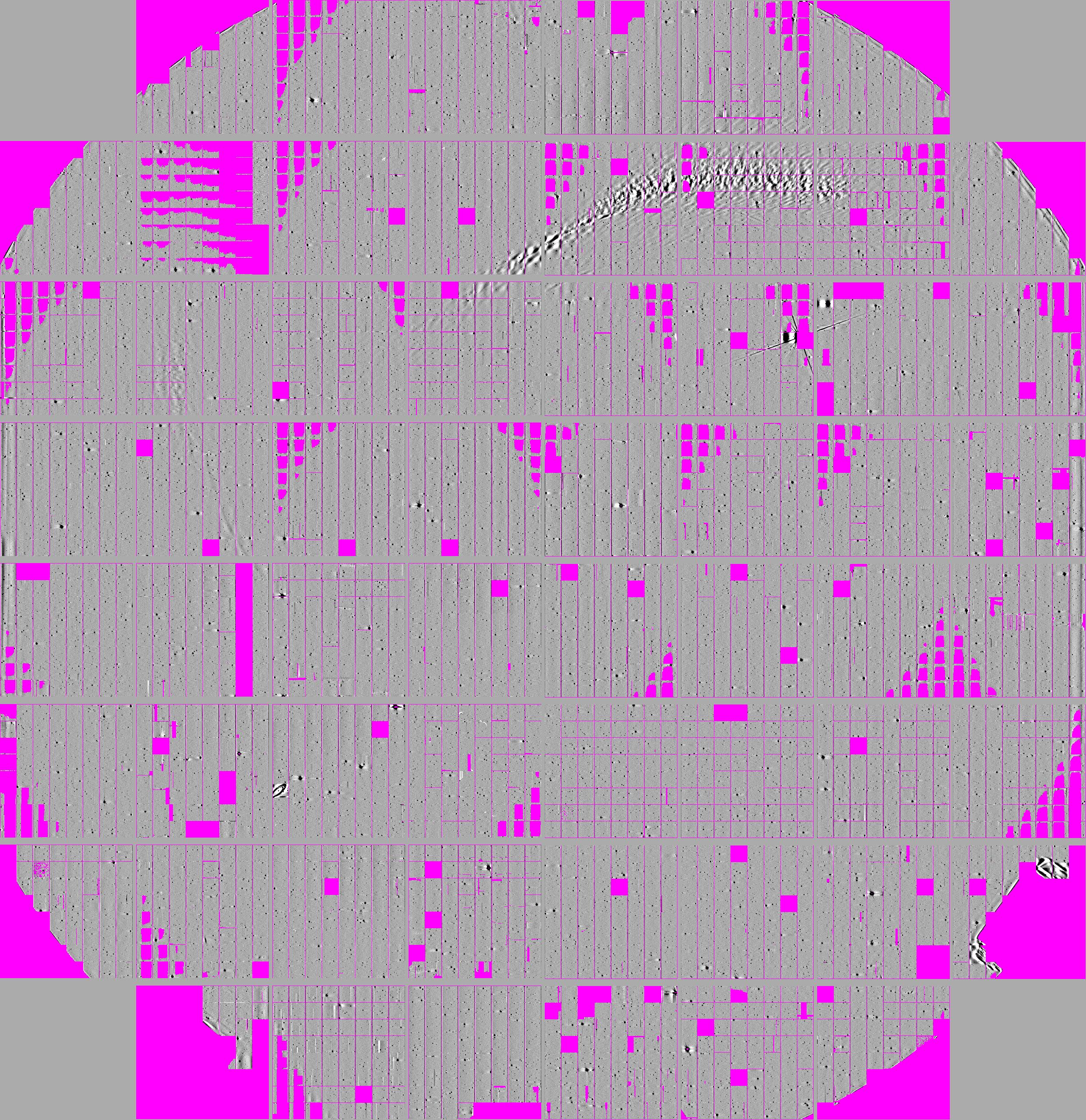
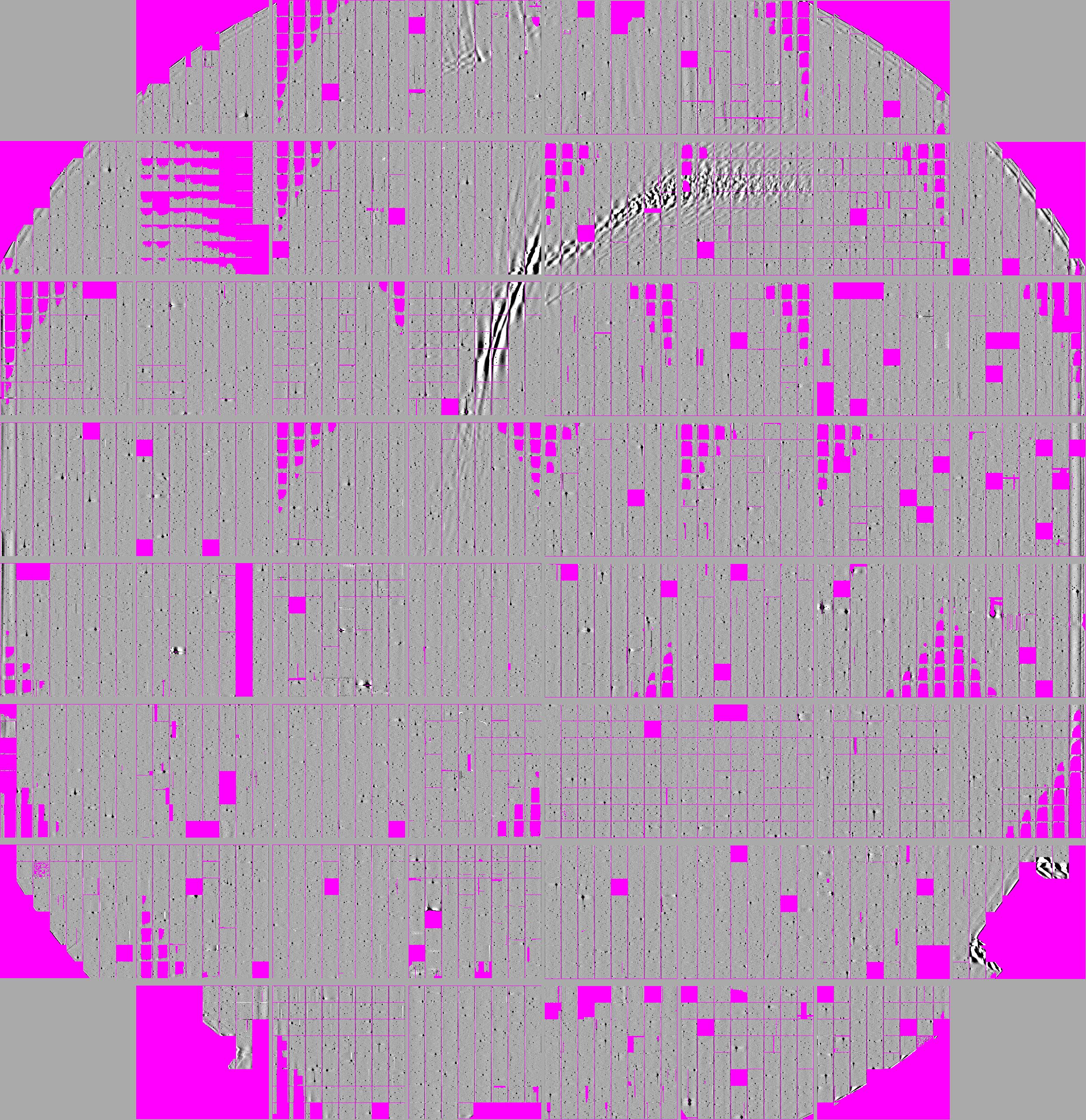
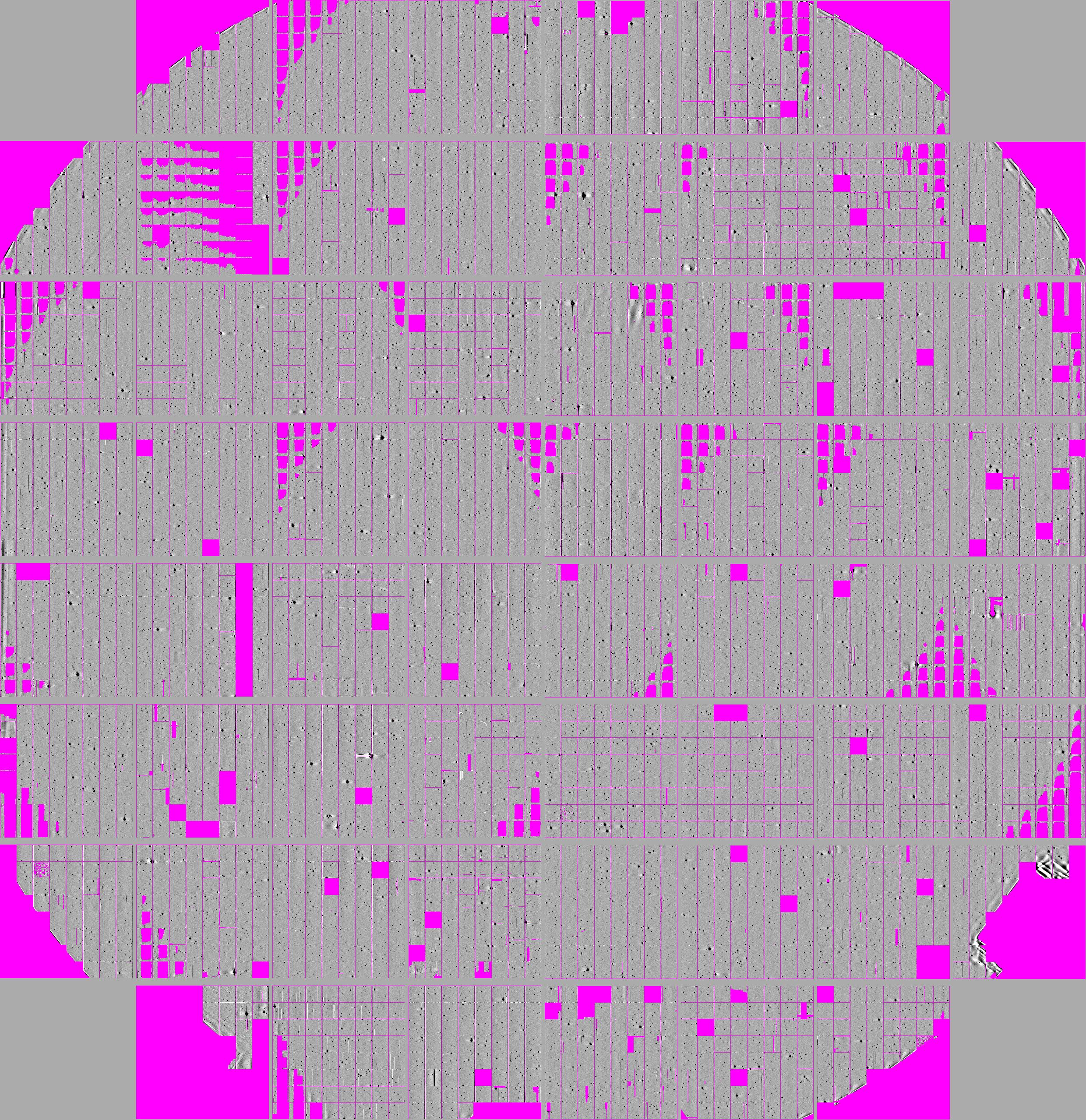
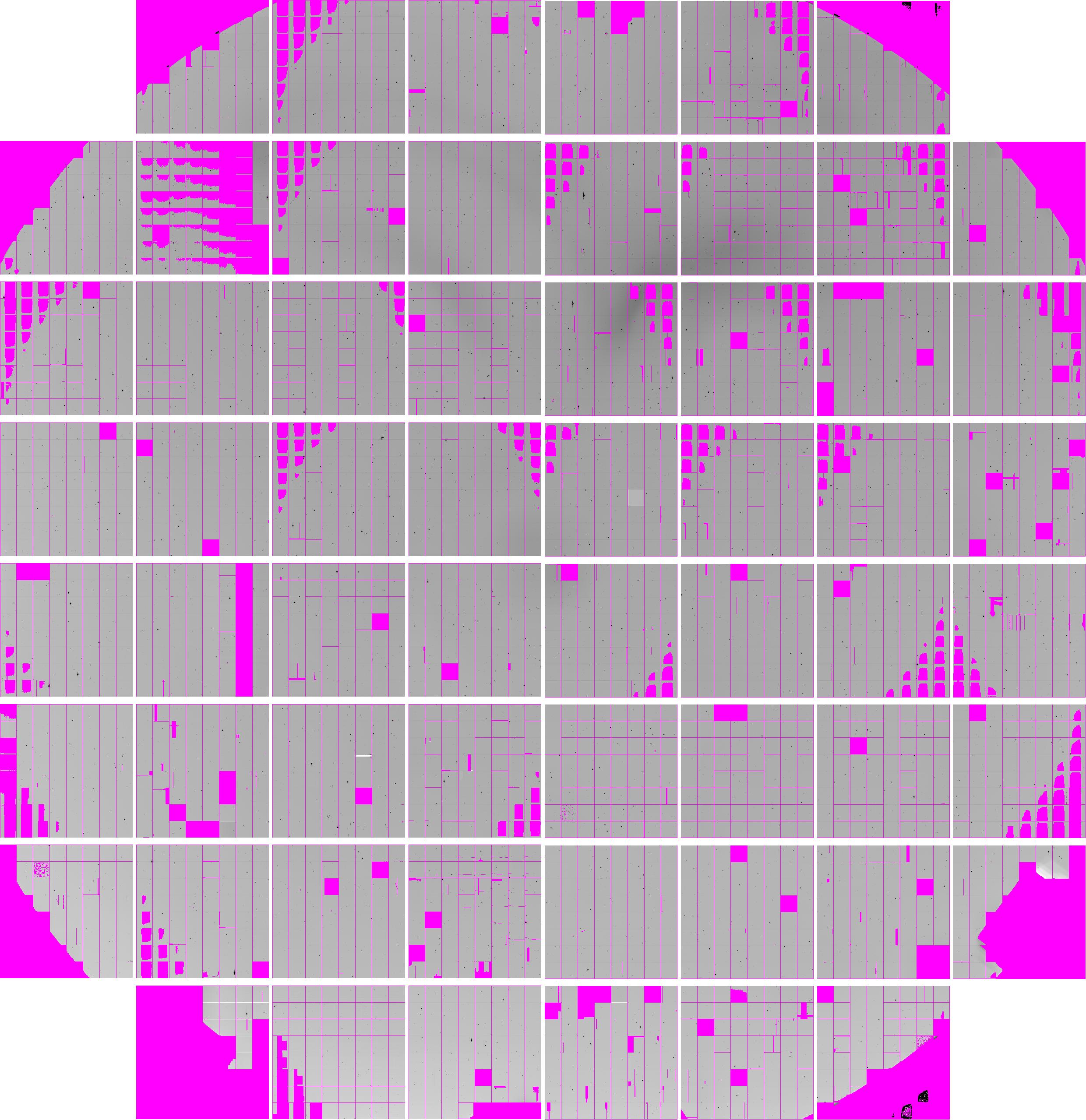
In an attempt to find a way for the IPP to identify which exposures show moon glints, I examined a series of Three Pi exposures that had small moon angles and had visible glint features. All exposures are in the i filter.
| exp_name | exp_id | dateobs | moon_angle | moon_phase
|
| o5080g0156o | 94818 | 2009-09-06 10:02:30 | 19.9828 | 0.547319
|
| exp_name | exp_id | dateobs | moon_angle | moon_phase
|
| o5080g0160o | 94822 | 2009-09-06 10:08:51 | 24.5752 | 0.547387
|
| exp_name | exp_id | dateobs | moon_angle | moon_phase
|
| o5080g0164o | 94826 | 2009-09-06 10:15:03 | 32.6811 | 0.547452
|
| exp_name | exp_id | dateobs | moon_angle | moon_phase
|
| o5080g0166o | 94828 | 2009-09-06 10:18:16 | 19.8979 | 0.547486
|
| exp_name | exp_id | dateobs | moon_angle | moon_phase
|
| o5080g0171o | 94833 | 2009-09-06 10:26:19 | 36.004 | 0.547569
|
Note that the bright glint in ota41 has a peak level of ~18k counts in 60 sec, while
the nominal background in that image is ~11k counts in 60 sec (16.3 mags per asec2)
| exp_name | exp_id | dateobs | moon_angle | moon_phase
|
| o5080g0173o | 94835 | 2009-09-06 10:29:37 | 31.0689 | 0.547603
|
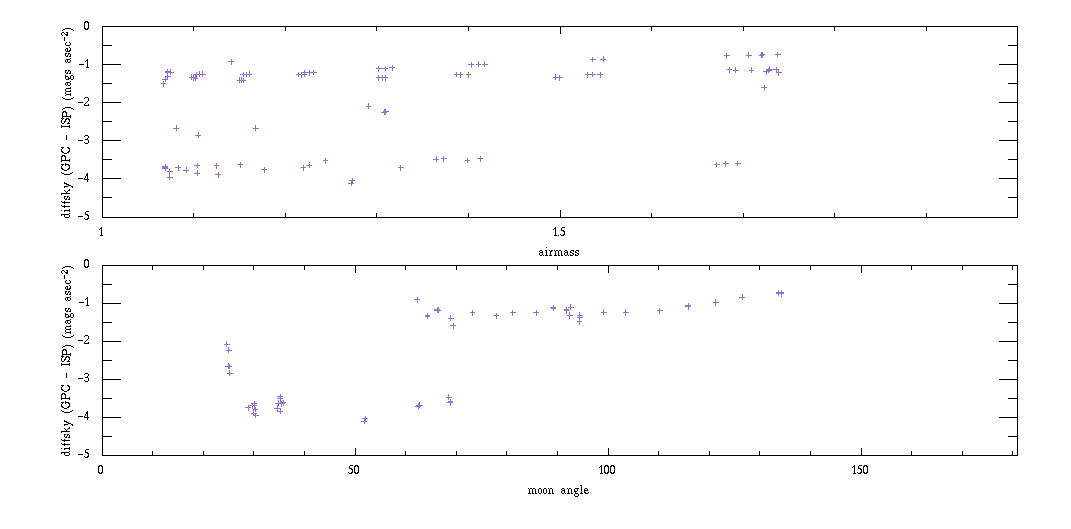
Sky brightness levels for matched pairs of ISP and GPC1 images as a function of airmass and moon angle. The ISP data is consistent with airmass effects. The GPC1 data shows strong glints at moon angles ~ 30-35 degrees.
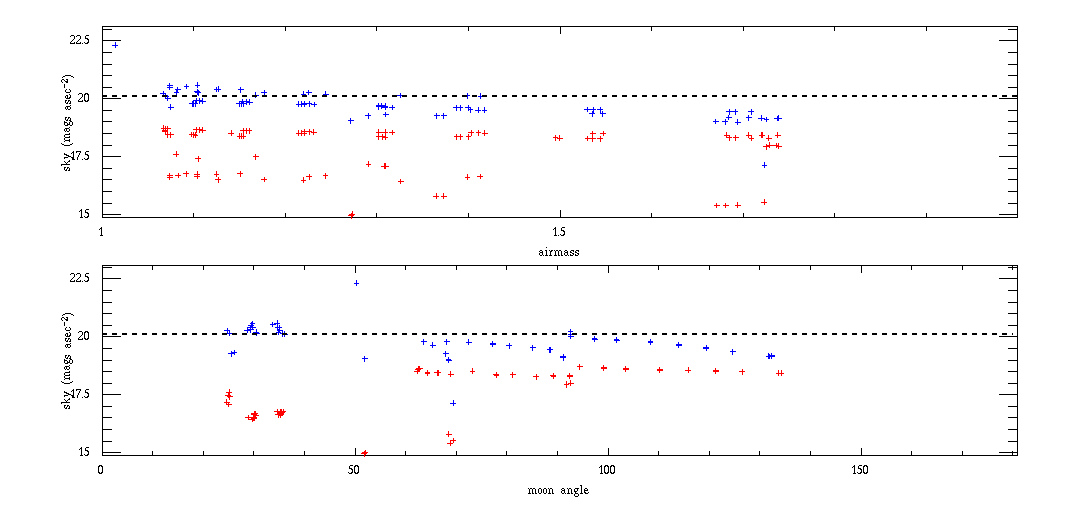
The same data, now plotted as differences in sky brightness. The pairing mitigates the airmass trends, showing that GPC1 gradually becomes brighter relative to the ISP, with the glints influencing the ~ 30-35 degree range. All "GPC1 bright" pairs with moon angle > 50 degrees all come from the same night, and the observing logs note clouds. Therefore, these points are likely not to be related to the telescope, but to variations in cloud cover.